
I used to think “waking up to a clean house” required staying up until midnight, angrily matching tiny plastic shoes to tiny plastic dolls while everyone else slept peacefully. That plan produced a clean-ish room and a mother who resented the entire household by breakfast.
This routine has a smaller promise: make tomorrow morning less hostile in fifteen minutes. It does not deep-clean, organize drawers, or erase proof that children live here. It clears the spaces that create the most visual noise and removes a few predictable obstacles from your morning.
What This Routine Is—and Is Not
This is a closing shift, not a full-house cleaning session. You are restoring function: a sink that can accept breakfast dishes, a living-room path nobody will trip over, and an entryway where shoes are findable without conducting an investigation.
The routine works because it has a hard stop. When the timer ends, you stop—even if the laundry basket contains seventeen objects that technically belong upstairs. Consistency beats one heroic Tuesday followed by six nights of refusing to look at the kitchen.
Your Tiny Nightly Cleaning Kit
- One lightweight basket for misplaced items
- One microfiber cloth or washable cleaning rag
- Your usual surface cleaner, used according to its label
- A small trash bag
- A broom, dustpan, or lightweight vacuum
- A timer that is not secretly a social-media portal
Keep the kit together if you can. Never mix cleaning products, and store all cleaners where children and pets cannot reach them. The goal is less friction, not an exciting chemistry experiment at 9:47 p.m.
The 15-Minute Nightly Reset
1. Minute 0–1: Set the Timer and Grab a Basket
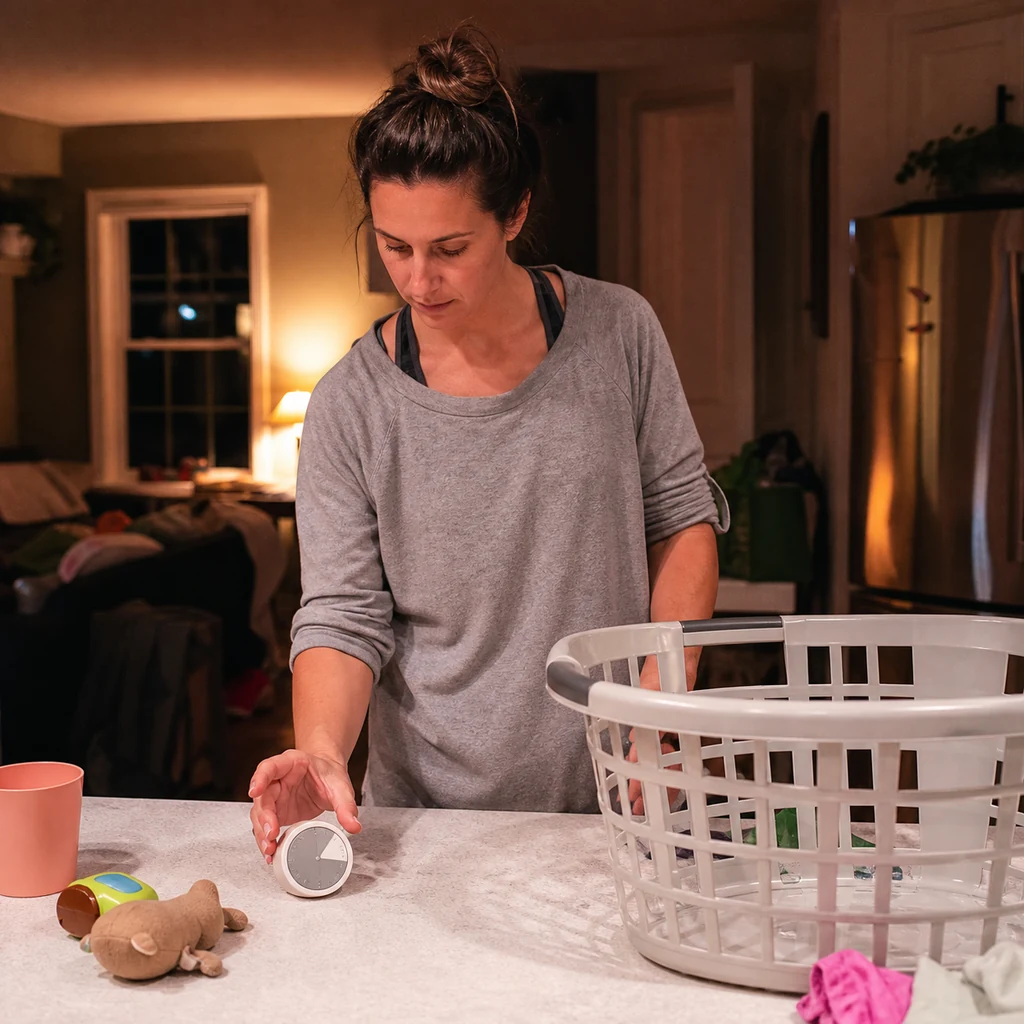
Set a fifteen-minute timer and place the basket in the room with the most visible clutter. Do not begin by checking messages, choosing a playlist, or searching for a better basket. Your phone has already taken enough of the evening.
Decide on three priorities before moving: kitchen function, clear walking paths, and tomorrow’s launchpad. Anything outside those priorities is optional. This prevents the classic mistake of polishing one faucet while the rest of the house quietly reorganizes itself into chaos.
2. Minute 1–5: Close the Kitchen

Load the dishwasher or stack dishes neatly beside the sink if it is running. Put obvious food away, fill one soaking pan, and wipe the main prep counter. Do not hand-wash twelve water bottles unless tomorrow genuinely depends on them.
Focus on what morning-you needs: somewhere to make coffee, prepare breakfast, and set down a lunchbox. A few crumbs behind the toaster are not an emergency. If the kitchen is unusually rough, spend all four minutes on dishes and leave the counters for the next night.
3. Minute 5–7: Basket the Wandering Clutter

Walk through the living room and main hallway, placing anything that belongs elsewhere into the basket. Toys, socks, books, cups, hair ties, and mysterious school papers all qualify. Do not return each object individually; that turns two minutes into a pilgrimage.
Make one exception for trash and dishes: throw trash away and take dishes toward the kitchen. Everything else stays in the basket until the end. If you know exactly where an item belongs and the spot is within arm’s reach, fine. We are not accepting scenic detours.
4. Minute 7–9: Reset the Living Room’s Big Surfaces

Straighten sofa cushions, fold or drape the throw, and clear the main coffee-table surface. These large shapes dominate what your eyes notice, so correcting them creates an outsized sense of order even when a basket of unsorted toys still exists nearby.
Choose one container for remotes and another for toys currently in rotation. You do not need to color-code the blocks or create a museum-quality display of board games. The room only needs to be usable when the first awake child launches into it tomorrow.
5. Minute 9–11: Give the Main Bathroom a Two-Minute Reset
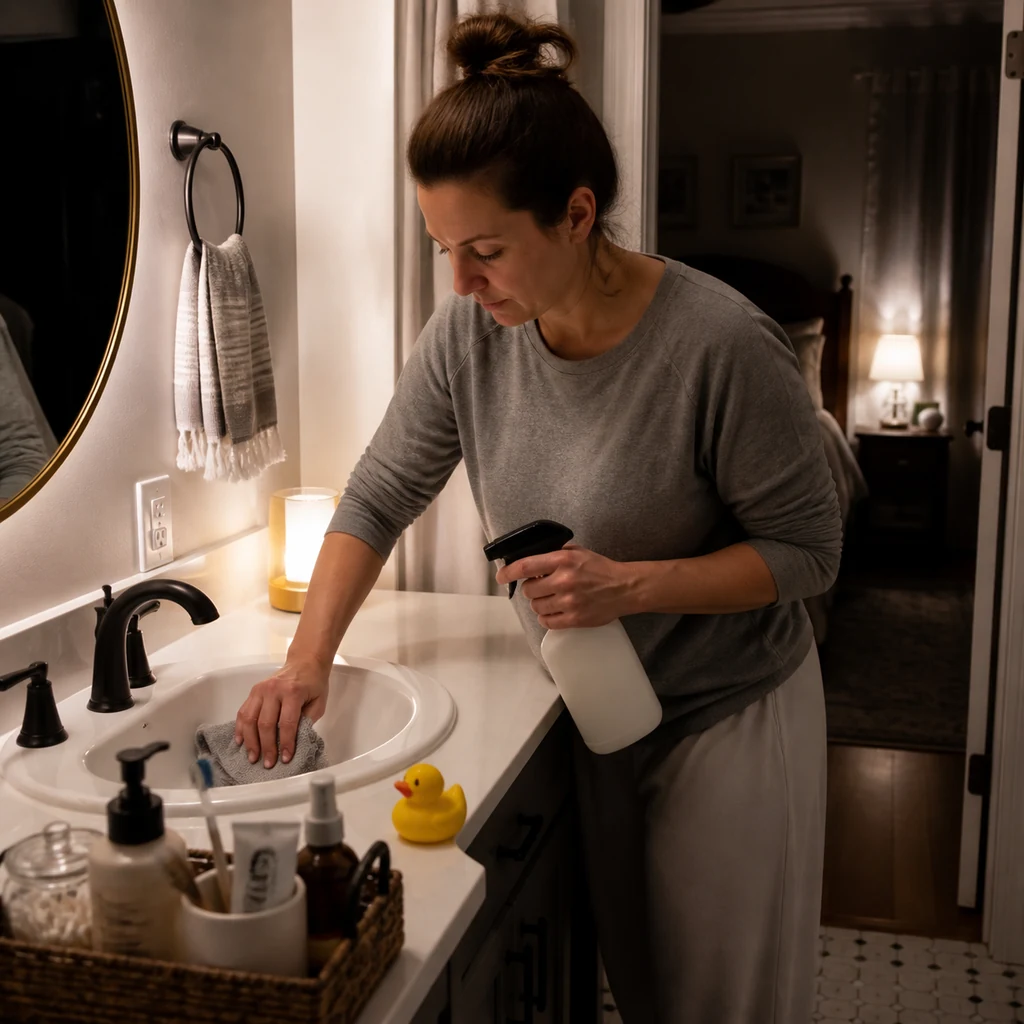
Put obvious products back, hang the hand towel, and wipe the sink and counter. Check the toilet paper and empty the small bin only if it is full. Skip the shower, mirror detailing, grout, and every other task capable of stealing your remaining evening.
Use a product suitable for the surface and follow its contact-time and safety directions. If you are too tired to clean safely, simply clear the counter and replace the towel. A routine that adapts to your energy survives longer than one that demands perfection.
6. Minute 11–13: Build Tomorrow’s Launchpad
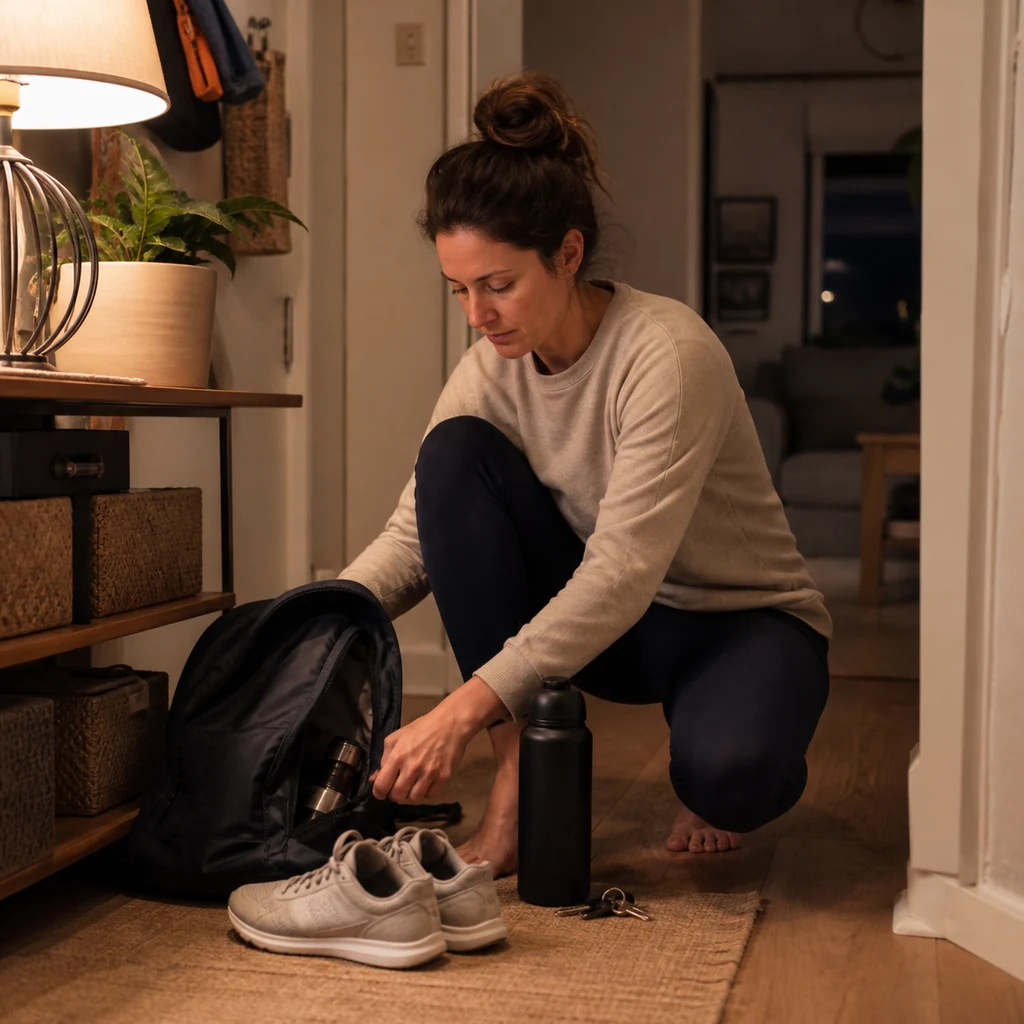
Move to the entryway or kitchen corner where mornings tend to unravel. Place backpacks, shoes, keys, permission slips, and filled water bottles together. Check the calendar once and put one genuinely essential item where it cannot be missed.
Do not pack every lunch, iron outfits, and solve the entire week. The launchpad is a decision-reduction station, not a command center requiring laminated labels. Two minutes spent here can prevent ten minutes of everyone accusing everyone else of moving one sneaker.
7. Minute 13–15: Clear the Path, Take the Trash, and Stop
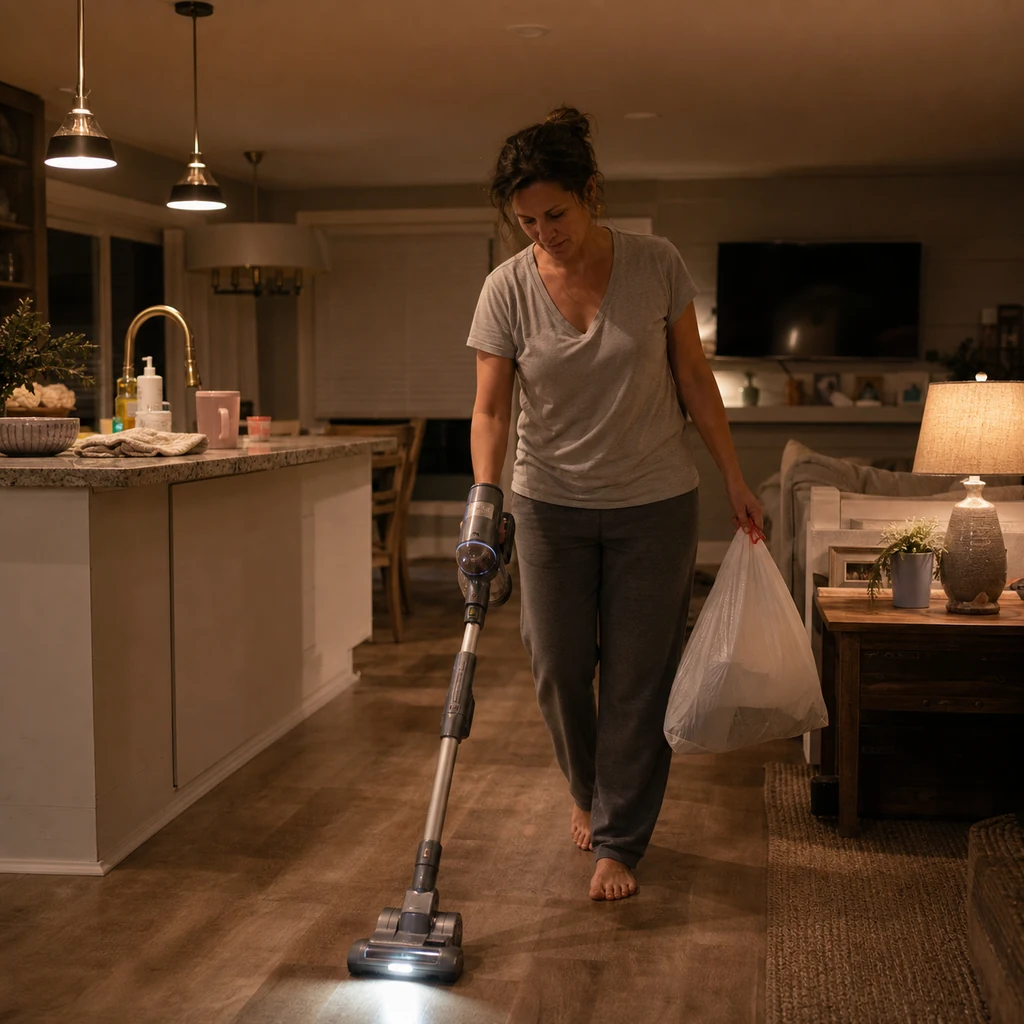
Sweep or vacuum only the most visible high-traffic path, usually between the kitchen, living room, and entryway. Pick up crumbs and obvious debris; ignore corners unless something has achieved independent life. Tie the trash bag and place it by the door or take it out.
Carry the clutter basket to one designated holding spot. If time remains, distribute a few items, but the timer is the finish line. Turn off the lights, plug in the vacuum, and leave. You kept a promise to tomorrow-you; do not ruin it by opening a junk drawer.
How to Make the Routine Stick
Attach the reset to something that already happens, such as starting the dishwasher or making your evening tea. Use the same order every night so you spend less energy deciding. On especially difficult evenings, do a five-minute version: dishes, walking path, and morning essentials.
Invite family members into the reset with concrete jobs rather than the vague command to “help.” One person gathers dishes, another baskets toys, and another prepares backpacks. If you are doing it alone, reduce the standard rather than quietly turning fifteen minutes into forty.
Frequently Asked Questions
What if my house is too messy for fifteen minutes?
Then fifteen minutes will not finish it—and that is fine. Use this routine to restore the same functional zones nightly while scheduling larger decluttering jobs separately.
Should I put away everything in the basket?
Only if time remains. Give the basket a permanent parking spot and empty it during a weekly reset or when another household member can help.
Do I have to do this every night?
No. Aim for the nights before your busiest mornings. A routine is a support system, not a new reason to grade yourself.