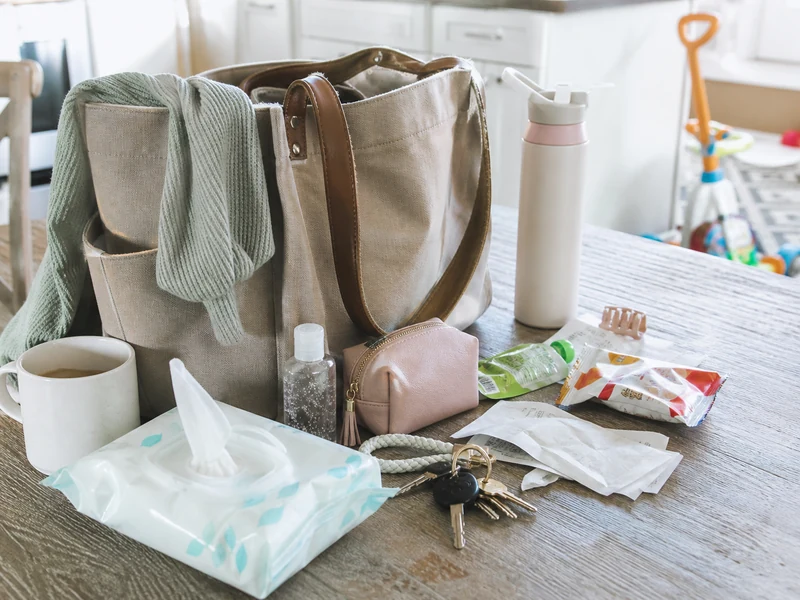
A mom bag is basically a mobile junk drawer with shoulder straps. It starts with good intentions: wipes, snacks, a wallet, maybe a cute pouch if you were briefly optimistic. Then three weeks later it contains fossilized crackers, five receipts, a toy wheel, and one sock that nobody recognizes.
This is not a minimalist fantasy where you carry a single lip balm and feel peaceful. This is a realistic mom bag essentials list for days when someone spills water, someone needs a snack, and you are trying to find your keys while holding the emotional stability of the household together with one tired hand.
The goal is not to carry more. The goal is to carry smarter, so the bag stops punishing you every time you reach inside.
The Rule: Pack for the Day You Actually Have
The best mom bag is not the prettiest one. It is the one that helps during the awkward ten minutes between “we are fine” and “why is there yogurt on the stroller?” Before buying anything new, think about your actual week: pickup, errands, playgrounds, appointments, and car snacks.
Keep the bag light enough that you do not resent it. Choose items that solve repeat problems, not items that make you feel like you are auditioning for a survival show.
Quick Mom Bag Checklist
- One pouch for kid items, one pouch for cleanup, and one tiny section for your things.
- Snacks that do not melt, explode, or become dust immediately.
- A water bottle that closes properly, because betrayal usually leaks.
- Wipes, tissues, and a small cloth for messes you did not authorize.
- Keys, wallet, phone charger, and a lip balm you can actually find.
- A five-minute reset once a week, ideally before the bag becomes sentient.
1. Dump the Bag First
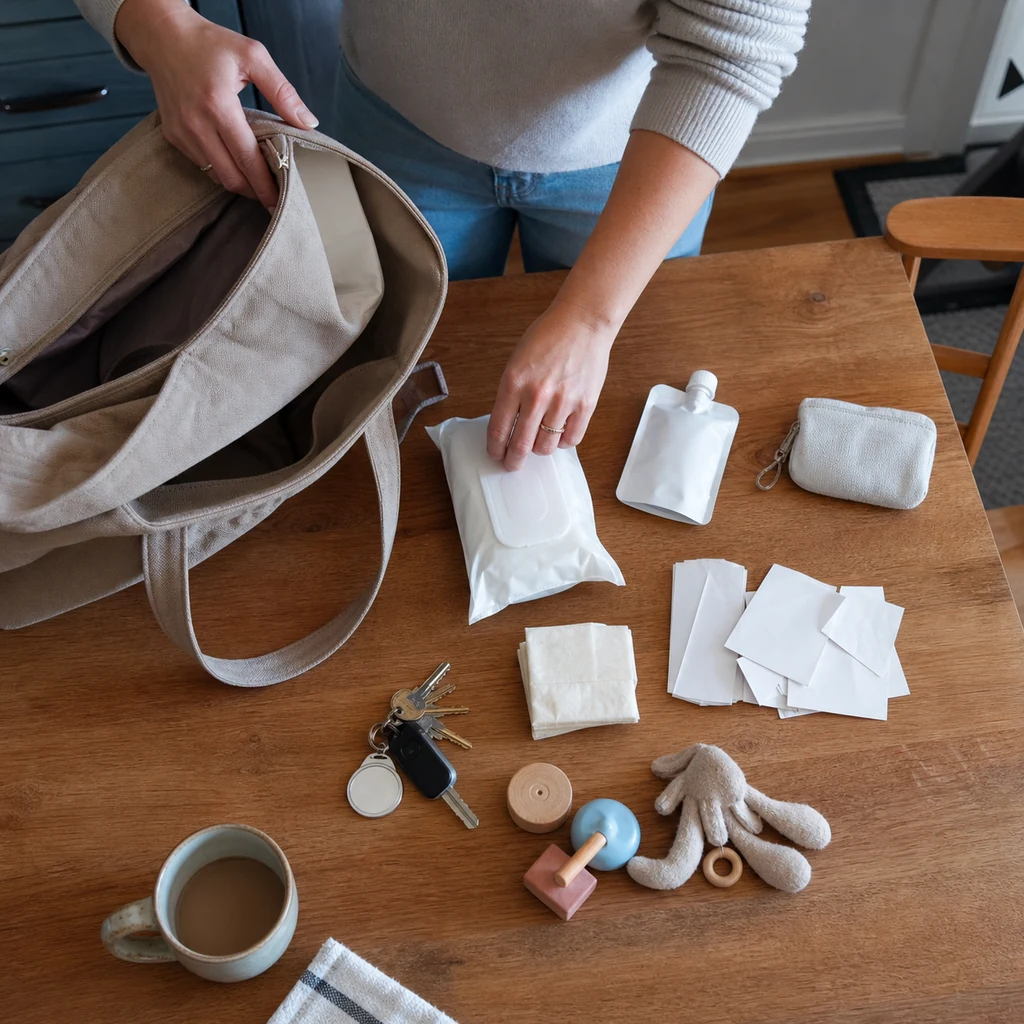
Do not try to organize the bag while everything is still inside it. That is how you end up gently moving trash from one pocket to another and calling it progress. Empty the whole thing onto a table, counter, or floor if the table has already been claimed by laundry.
Make three piles: keep, relocate, and throw away. Keep items you use weekly. Relocate things that belong in the car, medicine cabinet, diaper station, or toy bin. Toss old receipts, snack dust, dried wipes, and emotional baggage.
2. Use Pouches Instead of One Endless Hole
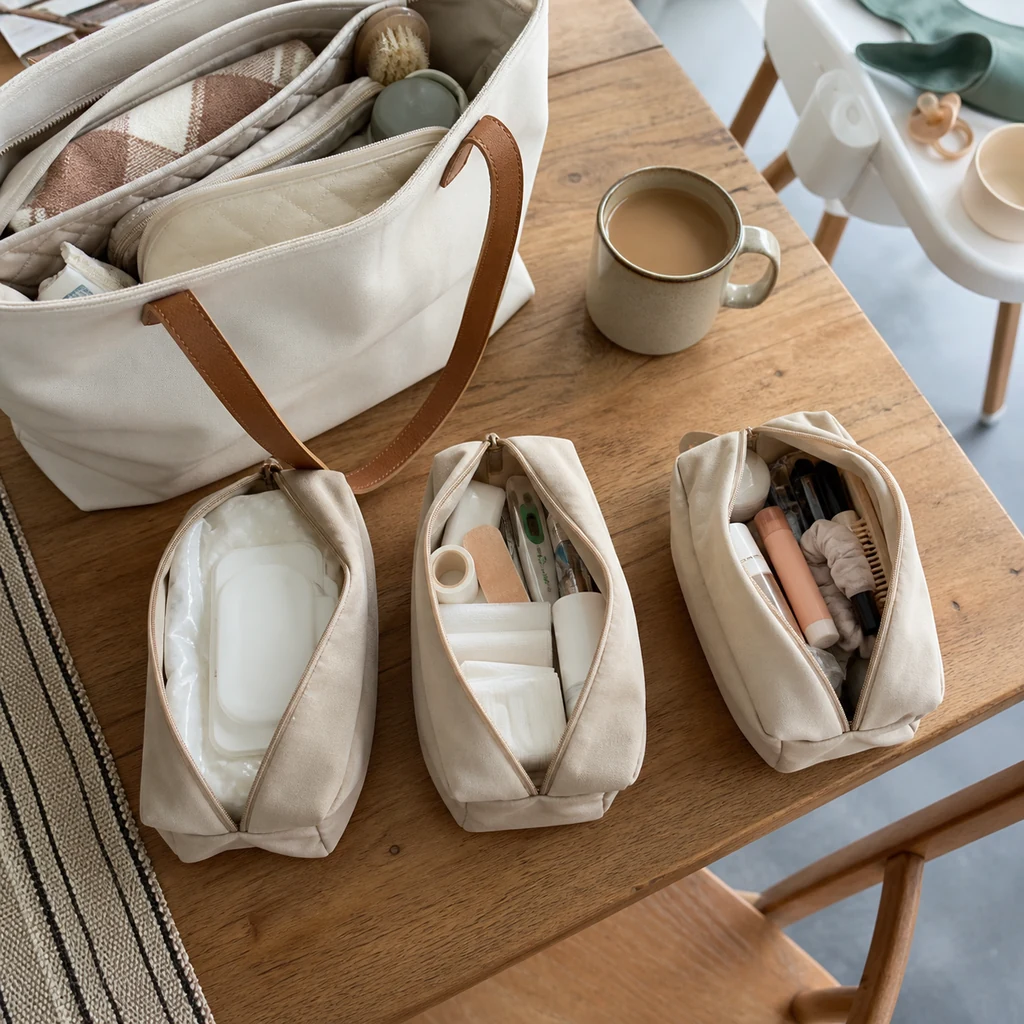
Pouches are the difference between “I have wipes somewhere” and actually finding them before the crisis evolves. Use a few soft zip pouches rather than a dozen tiny hard cases. Soft pouches flex, stack, and survive parking-lot shoving.
Labeling is optional, but categories are not. Try one pouch for cleanup, one for kid comfort items, and one for your personal things. If you change bags often, pouches also make switching painless. Lift, move, done. Suspiciously efficient.
3. Snacks and Water That Save Everyone’s Mood
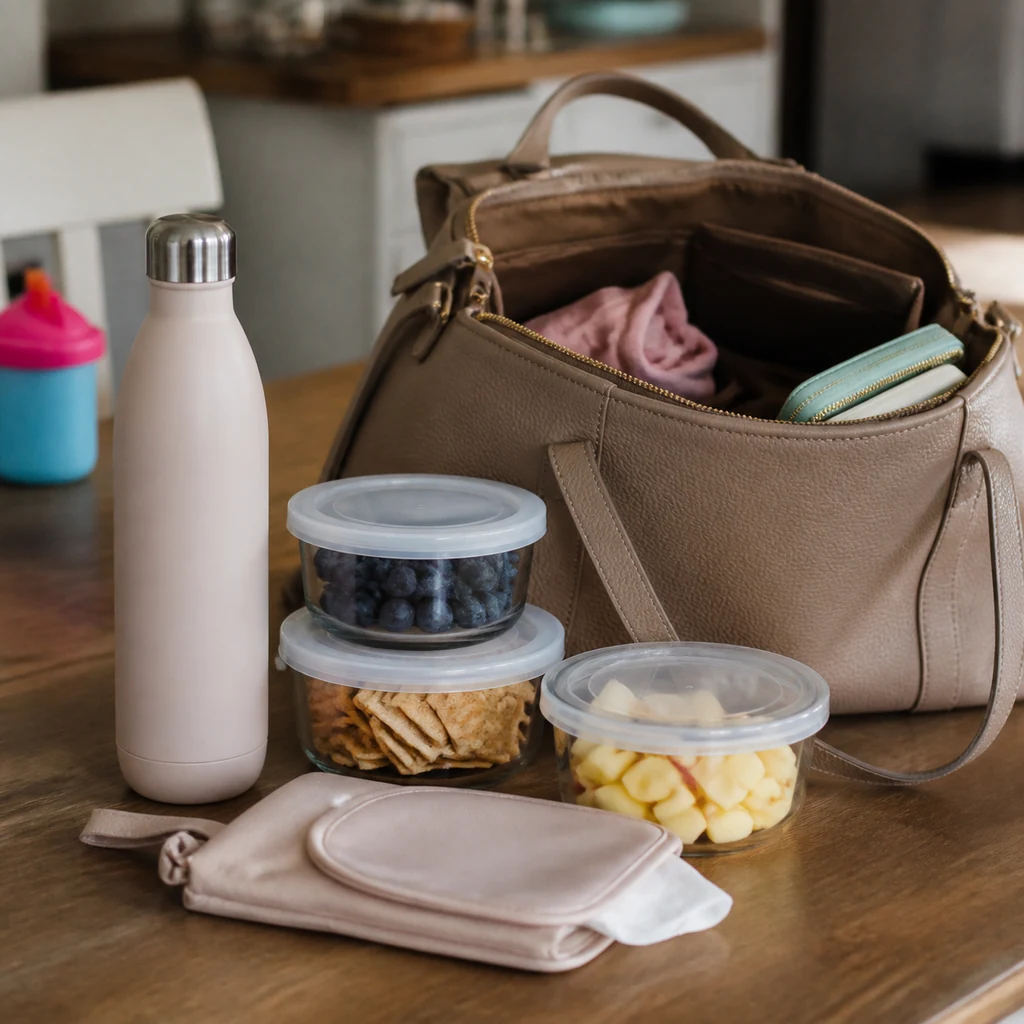
Snacks are not a personality flaw. They are public peacekeeping tools. Choose boring, sturdy snacks that can live in the bag for a few days without becoming soup, dust, or a science project.
Water matters too, but only if the bottle actually seals. A leaking bottle is not hydration; it is a plot twist. If the bag gets heavy fast, keep one family water bottle in the car and a smaller one in the bag for shorter errands.
4. The Tiny Cleanup Kit
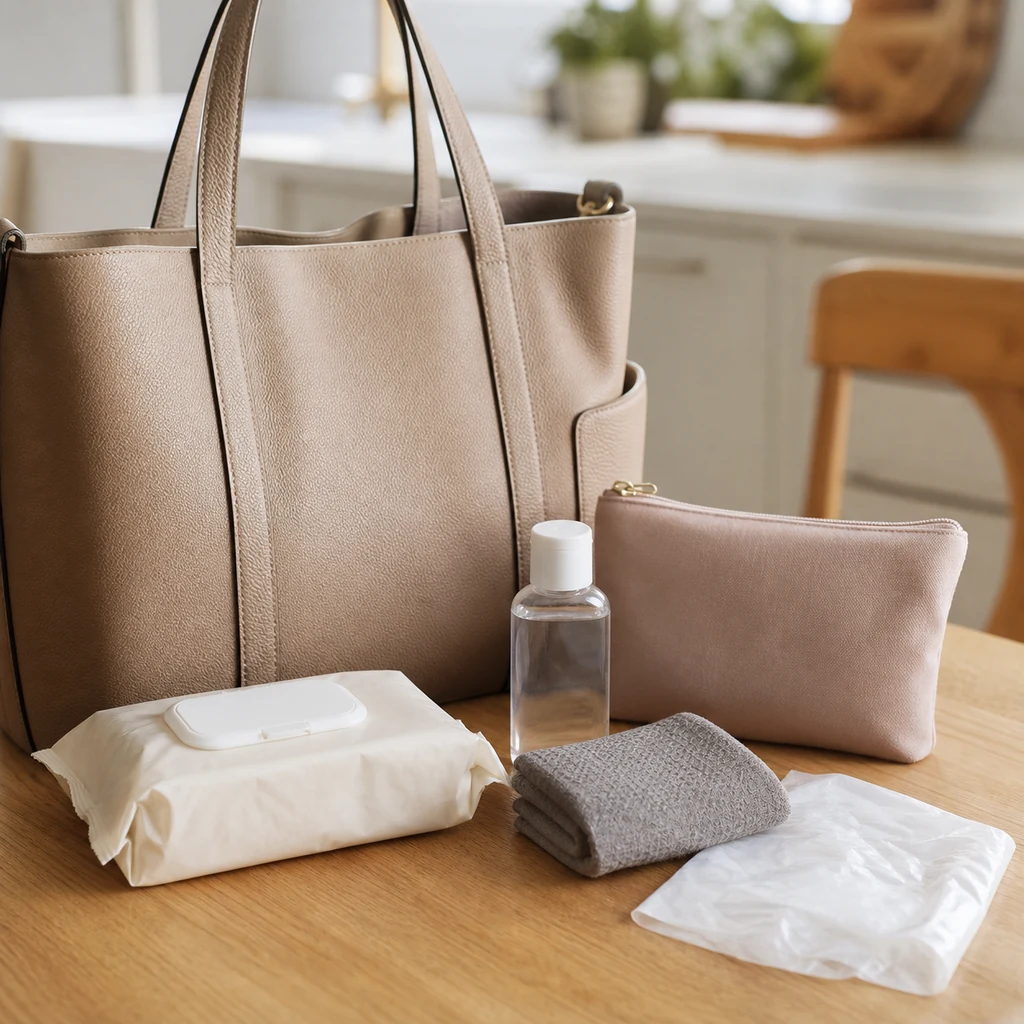
The cleanup kit does not need to be dramatic. You want wipes, tissues, a small hand sanitizer, a folded cloth, and one spare plastic or washable wet bag. This kit earns its keep during sticky hands, mystery spills, muddy playground exits, and restroom situations we do not need to describe poetically.
Keep it in its own pouch so moisture and crumbs do not migrate into your wallet. Refill it once a week, not every time you use one wipe. Perfection is how systems die. A simple Sunday-night check is enough.
5. A Mini First-Aid and Comfort Pouch
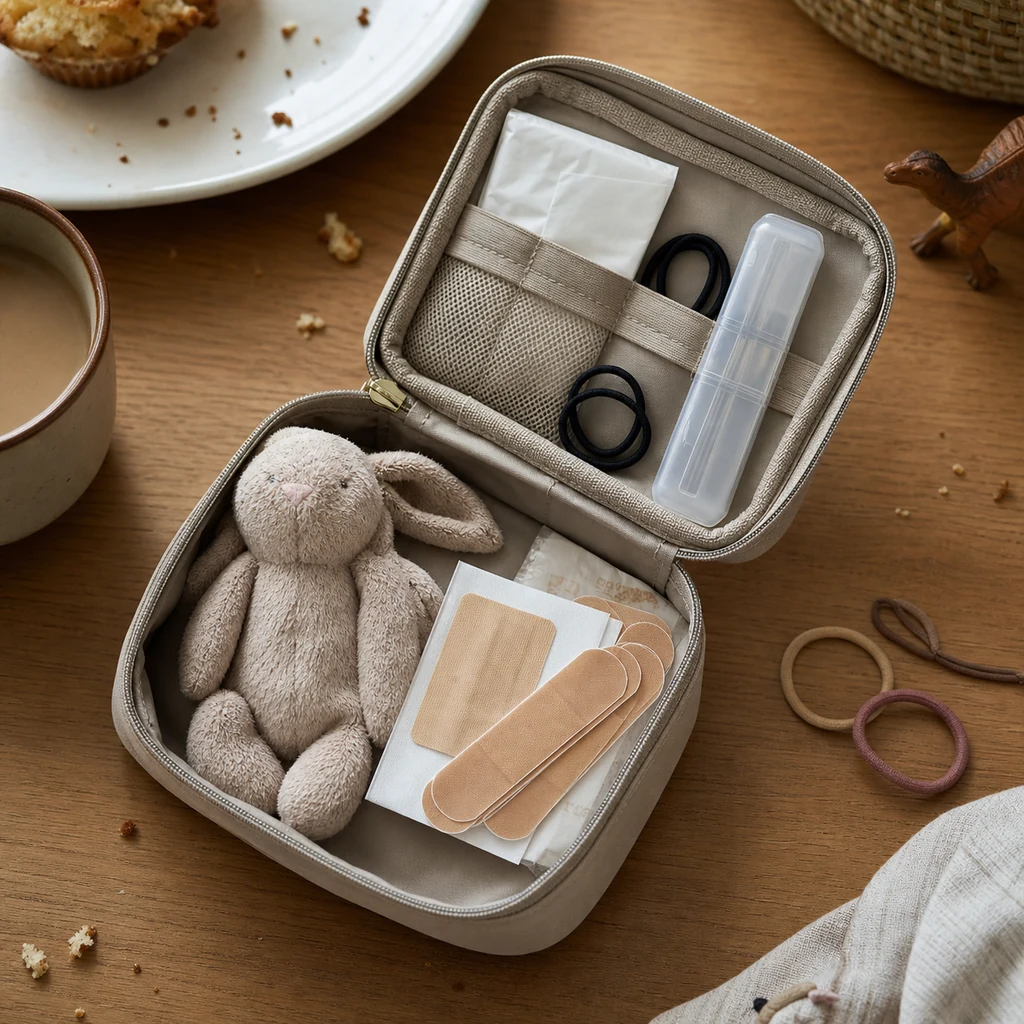
A tiny comfort pouch is not a full medical kit. It is for everyday bumps, hair emergencies, and the kind of small sadness softened by a bandage, tissue, or tiny familiar object. Keep basic adhesive bandages, hair ties, tissues, and a small comfort item.
If your family needs medication or medical supplies, keep them in the original packaging and follow your pediatrician’s guidance. The point is to stop digging through a tote while a child announces their finger is “broken” because it touched a chair.
6. The Mom Essentials That Are Actually Yours
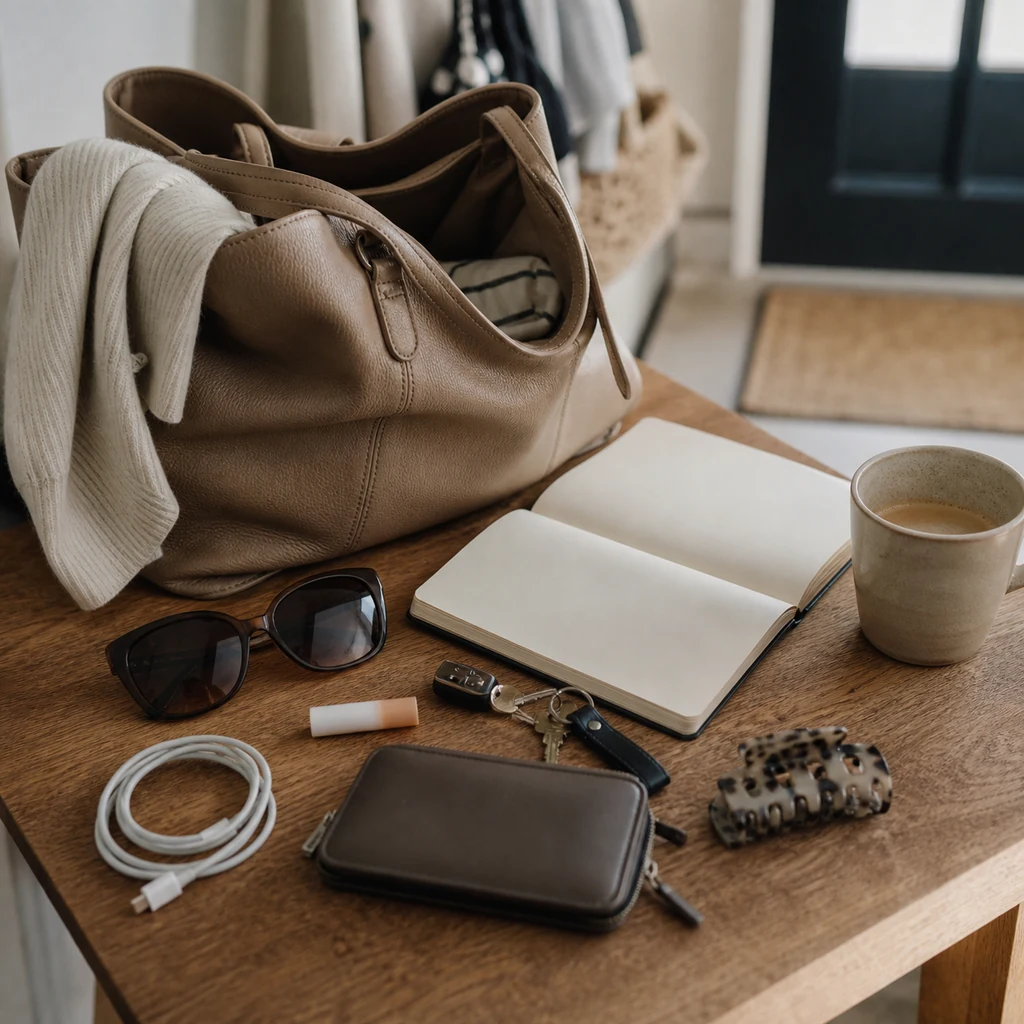
The bag may serve the children, but it is still your bag. Give yourself one protected pocket or pouch for wallet, keys, sunglasses, lip balm, charger cable, and whatever tiny item keeps you human. If your things are scattered between snack cups and toy dinosaurs, you will spend half your life searching for them while everyone asks why you are stressed.
This is also where you can keep a small notebook, earbuds, or hand cream if you use them. Do not pack aspirational objects you never touch. If the journal has been riding around untouched since March, maybe it wants to live on a shelf.
7. What to Throw Out Immediately
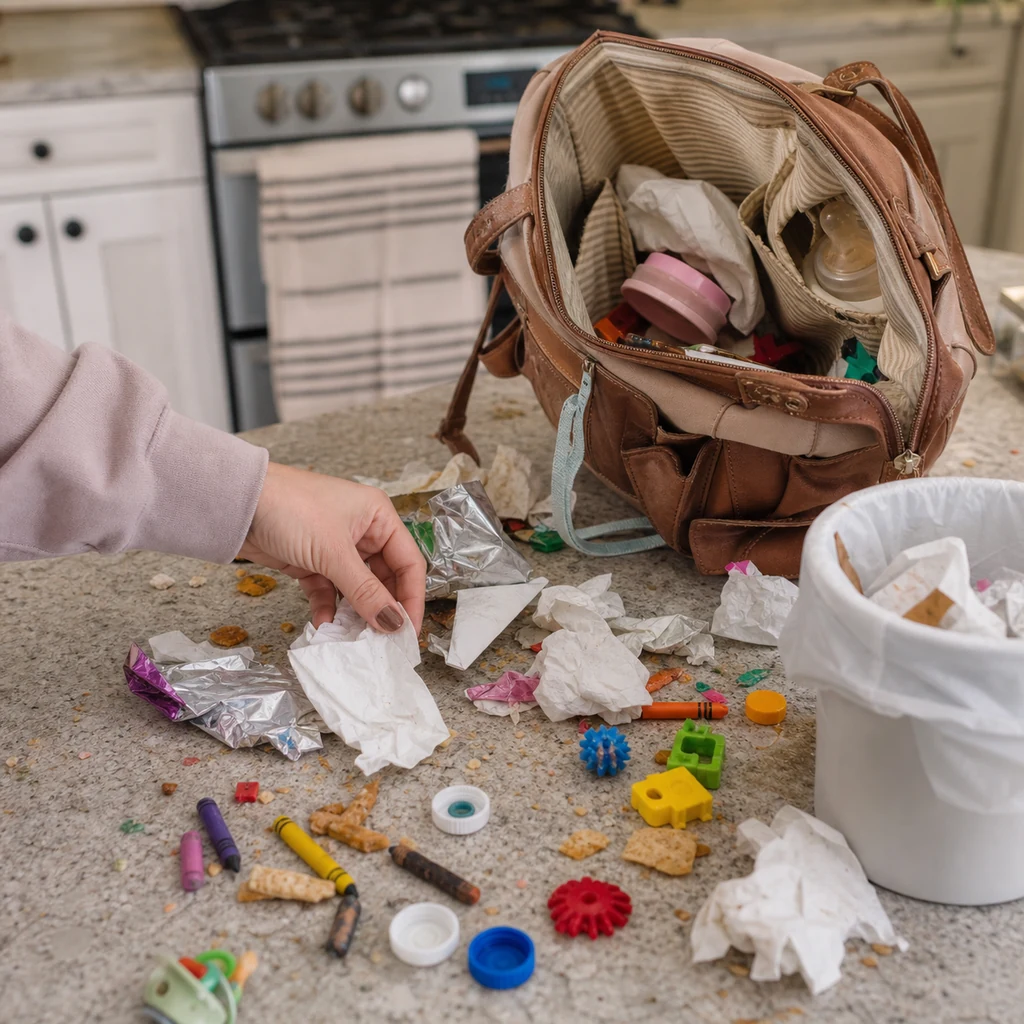
Throw out anything sticky, crumpled, expired, duplicated, or mysterious. Old receipts, broken crayons, empty wrappers, random lids, dried tissues, and snack fragments are not “just in case” items. They are bag sediment. Remove them before they form their own ecosystem.
Also remove anything that belongs somewhere else. Library cards can live in a wallet. Sports forms can live in the car folder. Tiny toys can return to the toy basket unless they are active emergency entertainment. The bag should not be the final resting place for every object your family has ever touched.
How to Keep It From Becoming a Portable Junk Drawer
The secret is a tiny reset, not a dramatic overhaul. Once a week, take five minutes to toss trash, restock wipes, check snacks, and move stray items back home. Do it when you already walk in the door, unload groceries, or pack for the next day. Habit stacking sounds fancy, but really it is just tricking your tired brain into doing one more useful thing.
If the bag gets messy again, that does not mean the system failed. It means you have children and leave the house. The win is making cleanup quick enough that you do not avoid it for a month.
A Seven-Day Carry Check to Try
Before buying pouches or a new bag, use the one you already own for seven normal outings. Put a small piece of painter’s tape on each item. Remove the tape when that item is actually used. At the end of the week, the untouched tape shows what you carried “just in case” but never reached for.
Exceptions matter. Keep true safety essentials even if their tape remains: prescribed medication, emergency information, and supplies required for a baby or a specific medical need. Store medicines in their original child-resistant packaging and follow their storage directions; a loose pill in a cute pouch is not an organizational win.
- One-hour errand: water, one snack, wipes, wallet, phone, keys, and age-specific essentials may be enough.
- Half-day outing: add one clothing change, a small comfort item, and any planned meal supplies.
- After each trip: remove trash, wet items, receipts, and food before the bag returns to its hook.
Finally, carry the packed bag for five minutes at home. If the strap digs in or you cannot find keys with one hand, reduce weight or move the most-used items to an outside pocket. The best mom bag is not the fullest one; it is the one you can navigate while somebody asks for a snack.
Frequently Asked Questions
How many pouches should a mom bag have?
Three is usually enough: cleanup, kid comfort, and mom essentials. More than that can become a pouch management career, which nobody requested.
What size bag works best?
Choose the smallest bag that fits your real essentials without forcing you to dig. Oversized totes invite clutter, but tiny bags create panic.
How often should I clean it out?
Once a week is ideal. If life is feral, aim for twice a month. Even a two-minute trash sweep makes the bag feel less haunted.