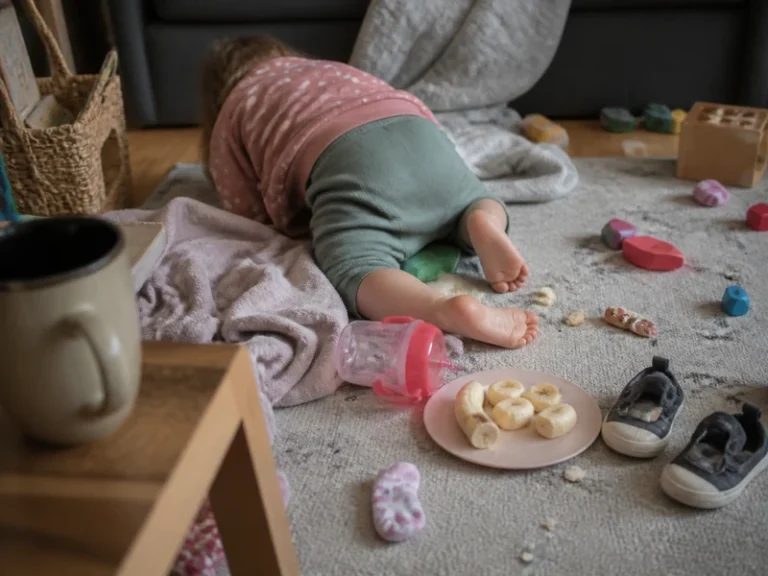
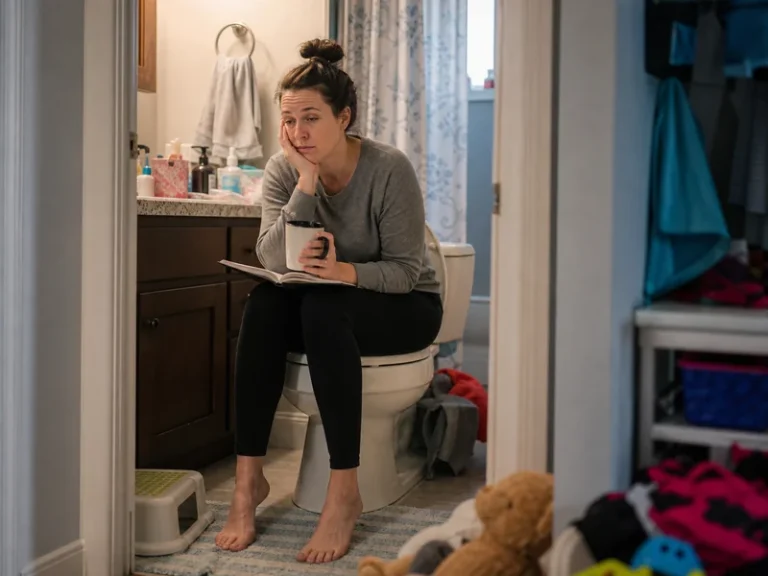
“We’re leaving in five minutes” is not a time estimate. It is an opening statement in a negotiation involving shoes, one item that was definitely here a second ago, and a sudden interest in the bathroom. Here is the translation guide for anyone who has stood at the front door holding keys long enough to reconsider the entire concept of clocks.
The scenes below are familiar comedy, not a challenge to run a stricter morning. Some days the door closes on schedule. This is about the other days.
Three acts of the five-minute exit
1. “Put your shoes on” means the shoe plot has begun

At minute one, a child has located both shoes. This feels promising until you discover that locating and wearing are separate departments. One shoe is on a foot; its twin is on the rug, being studied like a rare fossil. The backpack watches from the bench. The adult holds keys and performs the universal parent expression: I can be patient for exactly as long as it takes me to find my other shoe.
There is no villain here. A shoelace can become fascinating when someone announces departure. If the same pair goes missing every morning, a simple after-school drop zone might help later. Right now, everyone is still inside the house, and one shoe has a surprisingly convincing argument.
2. “I have everything” excludes the water bottle

At minute three, the shoes are on. Someone announces, with courtroom confidence, that they have everything. The backpack is present. The jacket is present. The water bottle has chosen a solo career on the kitchen counter.
The return trip is short in distance and long in emotional mileage. You pick up the bottle, then briefly wonder whether you also need the library book, the signed form, or the snack that was on the counter before the counter became a landing strip. For a genuinely useful home for the bottle parts, there is a no-buy cabinet reset. For this morning, the bottle is in hand. That counts as progress.
3. “I need the bathroom” is the closing twist

At minute five, everyone is at the door. The adult has bag, bottle and keys. Then comes the announcement that should have arrived at minute zero. The child points down the hallway. The adult stares at the keys, as though the keys might have an alternative ending.
This is the point where the phrase “five minutes” quietly retires. The sensible move is to let the bathroom happen and revise the departure time in your head. A rushed morning can use a real rescue plan; it does not need a dramatic soundtrack supplied by the parent.
The unofficial translation
“We’re leaving in five minutes” may mean “please begin the series of small actions that eventually places us outside.” It is not an accurate forecast, but it can still start the process. Save this for the next morning when you are fully dressed, holding everyone’s things, and somehow the last person ready to leave.
What is your family’s most reliable final-door plot twist?