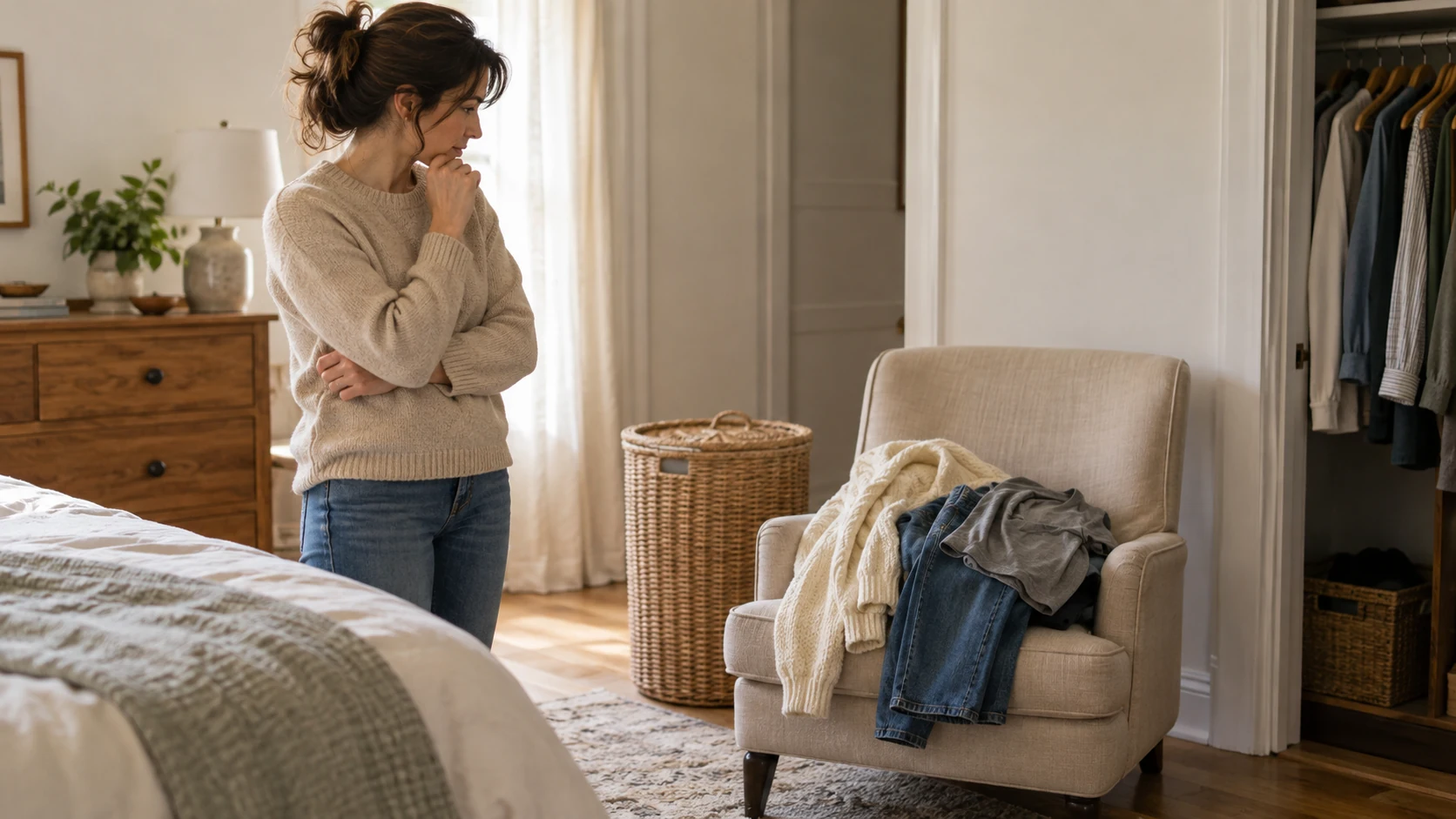
The chair in the bedroom has a job. Unfortunately, it may not be the job you bought it for. Jeans you wore for an hour, a cardigan you plan to use tomorrow, and the shirt that definitely needs washing all land in the same heap. By the weekend, picking an outfit means excavating it.
You do not need a new rack or a perfect closet to fix this. Give the in-between clothes a small, visible home, and give everything else a clear destination. This four-step reset uses the chair, a hamper, two spare hangers and the storage you already have. It takes about fifteen minutes for an ordinary chair pile; a larger one may take longer.
What you need
- Your existing laundry hamper and two spare hangers.
- A clear patch of bed for sorting.
- A little room at one end of an existing closet rail, or another dry, ventilated hanging spot you already use.
No labels or extra containers are necessary. The photos below show an example setup, not a requirement to own the same furniture.
The four-step clothes chair reset
Step 1: Empty the chair and sort on the bed
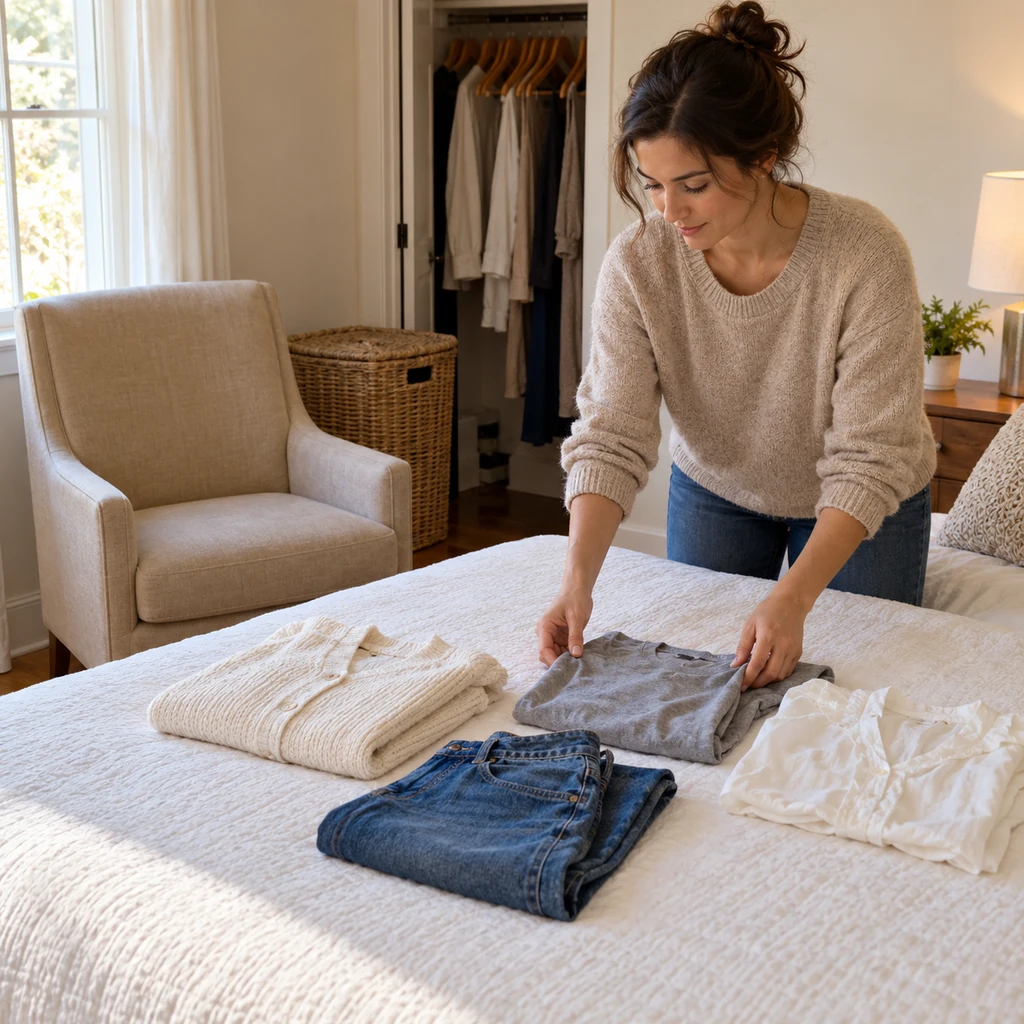
Move every garment off the chair so you can see the seat again. Make three loose groups on the bed: wash, wear again, and put away. The last group is for items that were never worn and simply landed on the chair. Keep the groups far enough apart that a clean shirt does not get mixed back into the laundry.
Do not pause to refold everything. If the pile contains accessories, return them to their usual spot as you go. A chair filled with clothes and bags is two separate decisions, not one giant organizing project.
Step 2: Make the wash decision once
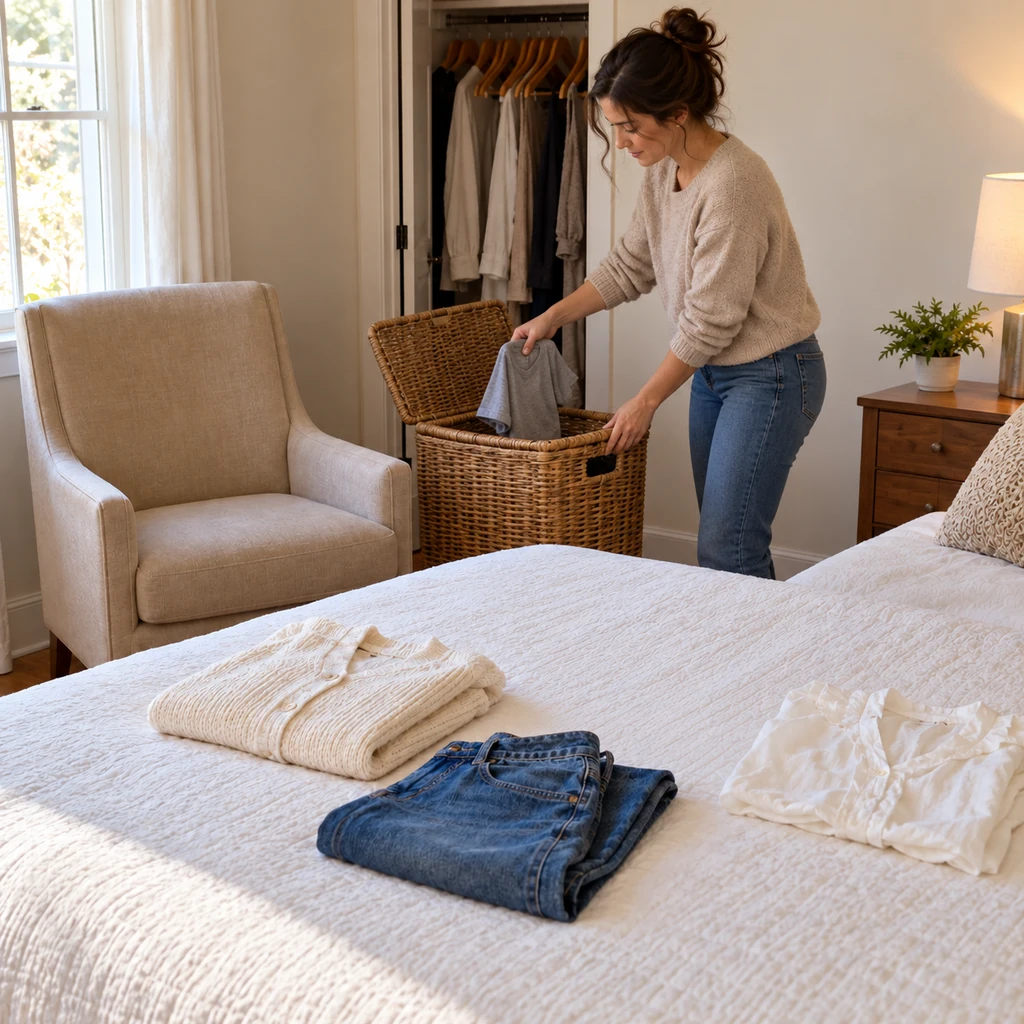
Put anything with a stain, noticeable odor, dampness or uncertain history into the hamper. Underwear and socks go there too. Check each remaining piece only once. If you would not comfortably put it on tomorrow, it does not belong in the wear-again group.
Set aside any damp garment to dry safely before laundering; do not bury it in a closed pile. Follow the garment’s care label when you wash it. The goal here is a simple sorting decision, not a universal rule about how many wears a fabric can take.
Step 3: Give rewear pieces two hangers
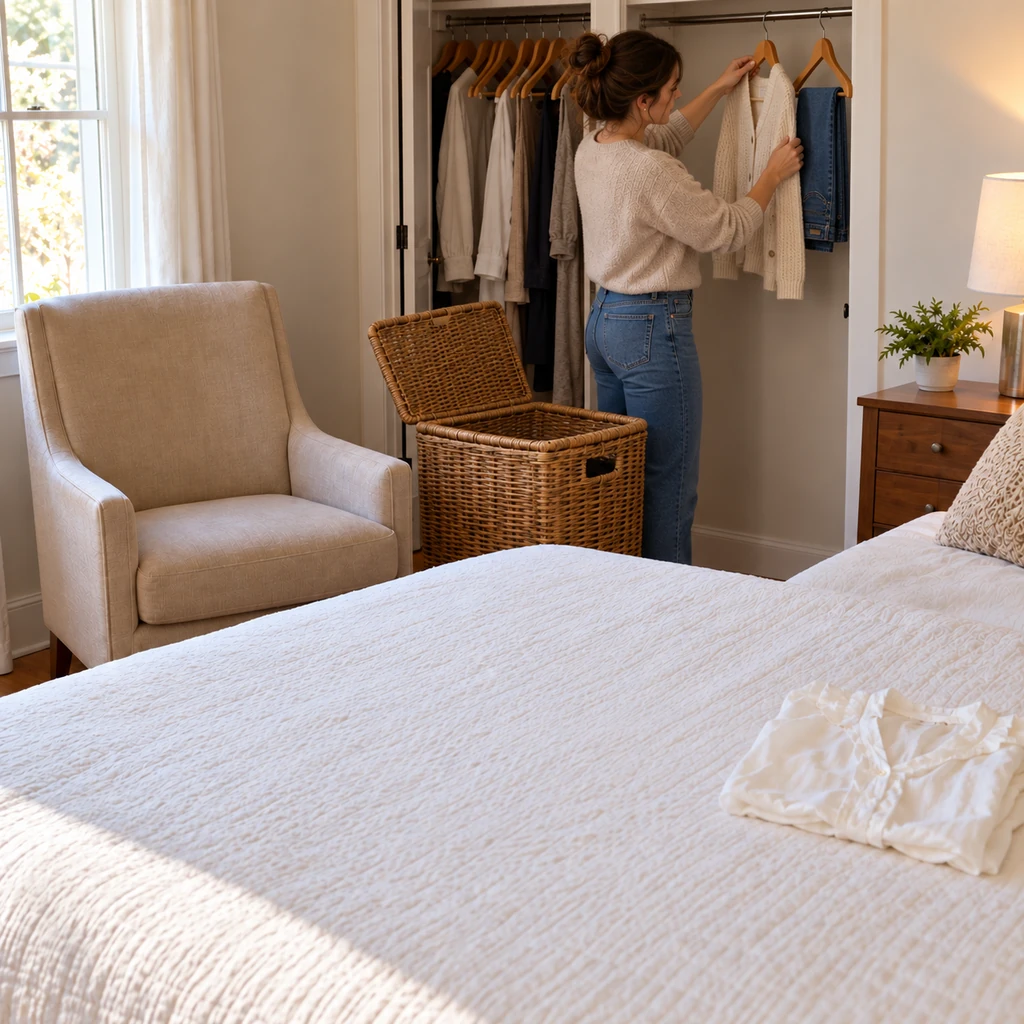
Hang the pieces you actually expect to rewear on two spare hangers at one end of the closet rail, separate from freshly laundered clothes. Fold jeans over one hanger and put a cardigan or another layer on the second. Let the garments air out before hanging them if needed. If your closet has no free space, use a dry, ventilated hanging spot you already own; avoid draping fabric over a heater or blocking a door.
The two-hanger limit is the point. If you have five possible rewear pieces, choose the two you are most likely to reach for next. Send the others to the wash or return truly unworn items to their usual storage. This is a short waiting area, not a second wardrobe.
Step 4: Return the unworn clothes and leave the seat clear
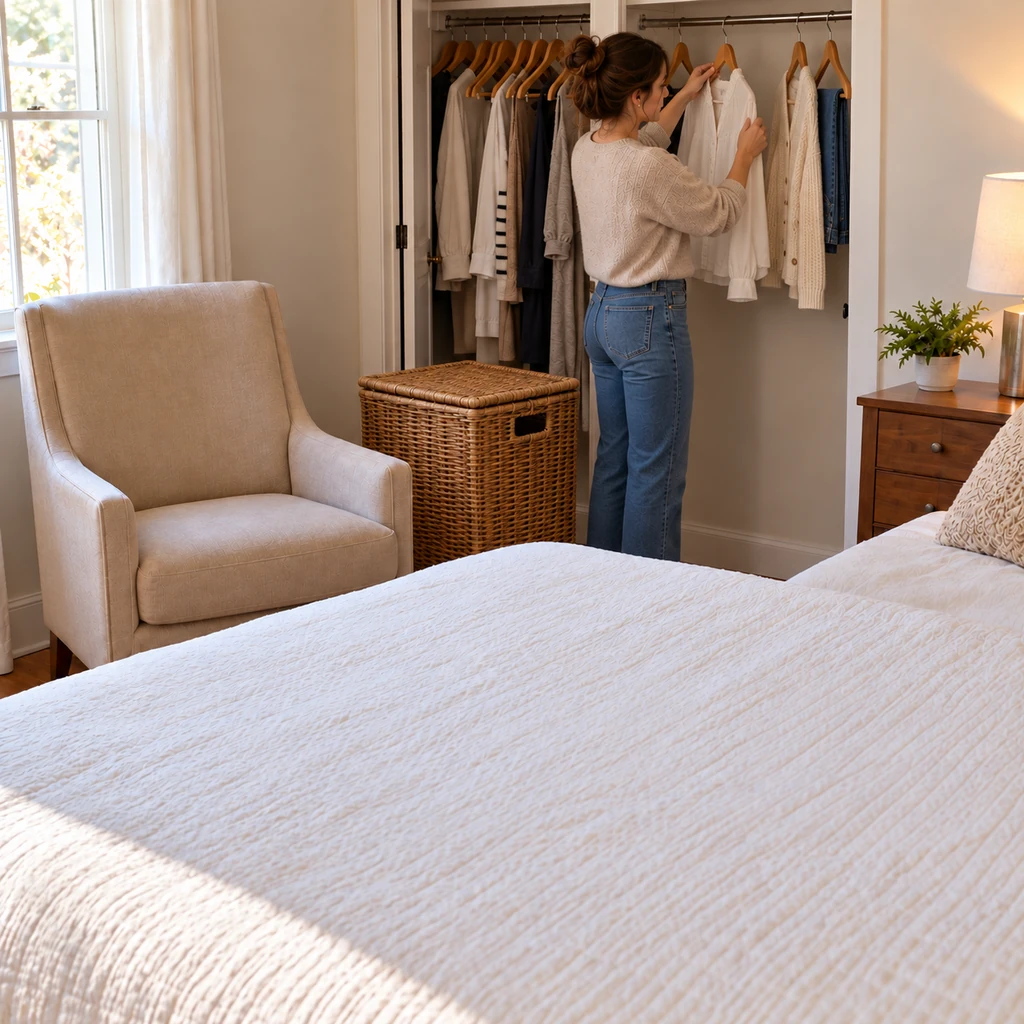
Put unworn clothes back in their normal drawer or closet spot. Return any accessory that drifted into the pile. The chair should be usable again; a cushion or throw can stay if that is how you use it, but clothes do not need to live on the seat.
Then make the next reset almost automatic: when you change clothes, choose hamper, two-hanger spot, or regular storage before you leave the room. If both hangers are occupied, decide which garment you will rewear first or wash one. A two-minute check when you put laundry away is enough to keep the limit visible.
If the pile comes back tomorrow
Notice where the decision stalls. If the hamper is across the house, move the one you own closer to where you change. If the closet rail is packed, free only enough space for two hangers instead of starting a full closet cleanout. If you keep dropping freshly washed clothes on the chair, the missing step may be putting away laundry, not managing rewear clothes.
This small reset fits into a broader home routine without becoming another nightly chore. The site’s 15-minute nightly routine can help you choose a realistic stopping point. If a room needs to feel calmer quickly before someone visits, the 20-minute fake-clean guide tackles visible surfaces. For a different family pile, the no-buy after-school drop zone keeps backpacks and papers out of the bedroom.
The chair does not have to stay empty forever. It just needs to stop being the place where three different clothing decisions wait for you at once.