Someone is coming over in twenty minutes, and your house currently says, “We live here aggressively.” This is not the moment to alphabetize the pantry, scrub baseboards, or confront the mystery drawer. You need the rooms a guest will actually see to look calmer, cleaner, and less likely to trip them.
This is a fake-clean, but not a dishonest one. You are removing obvious dirt, clearing useful surfaces, and refusing to deep-clean invisible corners for someone who came to drink coffee, not conduct an inspection.
What This 20-Minute Reset Can Actually Do
In twenty focused minutes, you can clear the entrance, calm the living room, make the kitchen look functional, and make the guest bathroom feel fresh. You cannot erase family life, and you do not need to. A home looks put together when pathways are open, major surfaces are usable, and the room smells like air instead of last night’s dinner.
Clean by visual impact, not room perfection. Set a timer, follow the order below, and do not wander off to organize a closet because you found one scarf. It can wait twenty more minutes.
The 20-Minute “Guests Are Coming” Cleaning Plan
1. Gather a Basket, a Bag, and Four Basic Tools — 2 Minutes
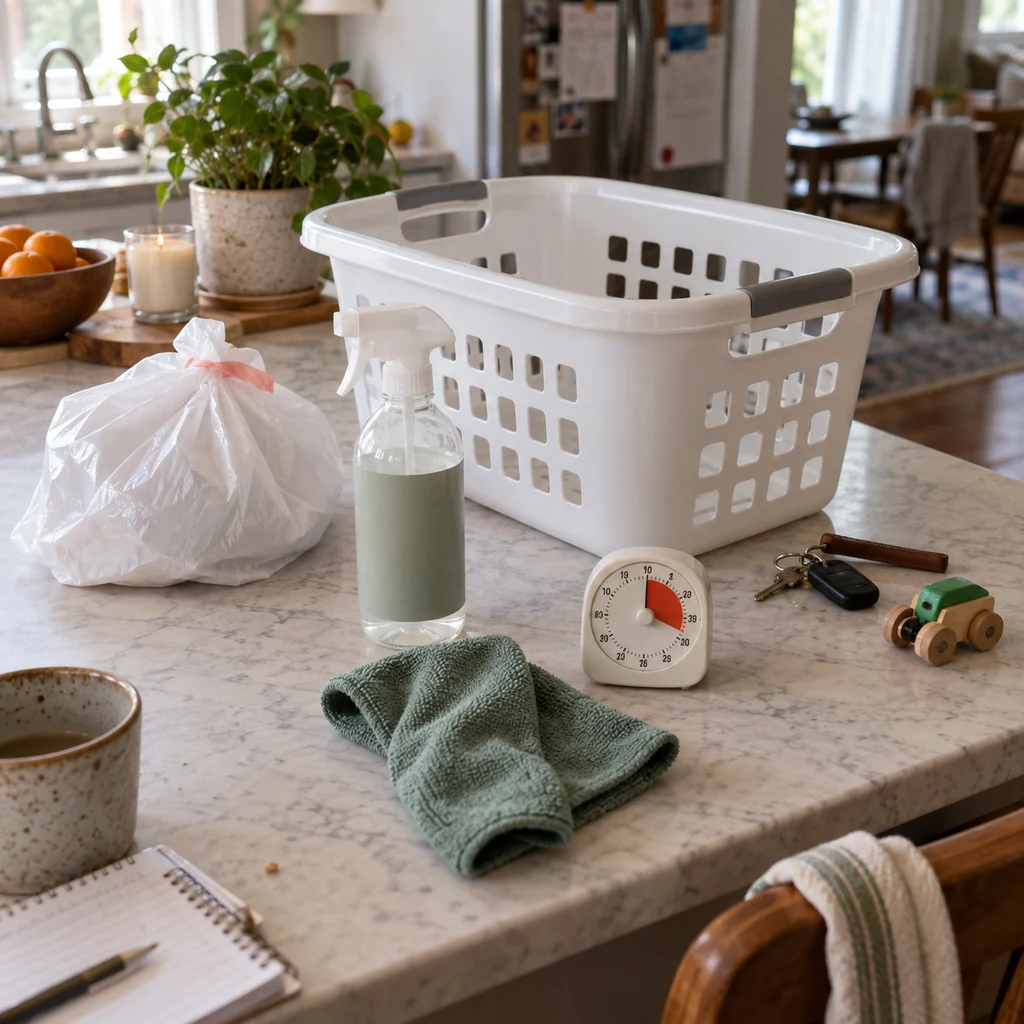
Grab one empty laundry basket, a small trash bag, an all-purpose cleaner suitable for your surfaces, and a microfiber cloth. Add a vacuum or broom only if the floors visibly need it. Set a timer for twenty minutes so the job has an ending.
The basket is for items that belong elsewhere; the bag is for trash. Do not sort the basket now. Collect visual clutter and hide it in a bedroom or laundry area before the doorbell rings. Put everything away later without making seven tiny trips.
2. Fix the First Five Feet Inside the Door — 2 Minutes
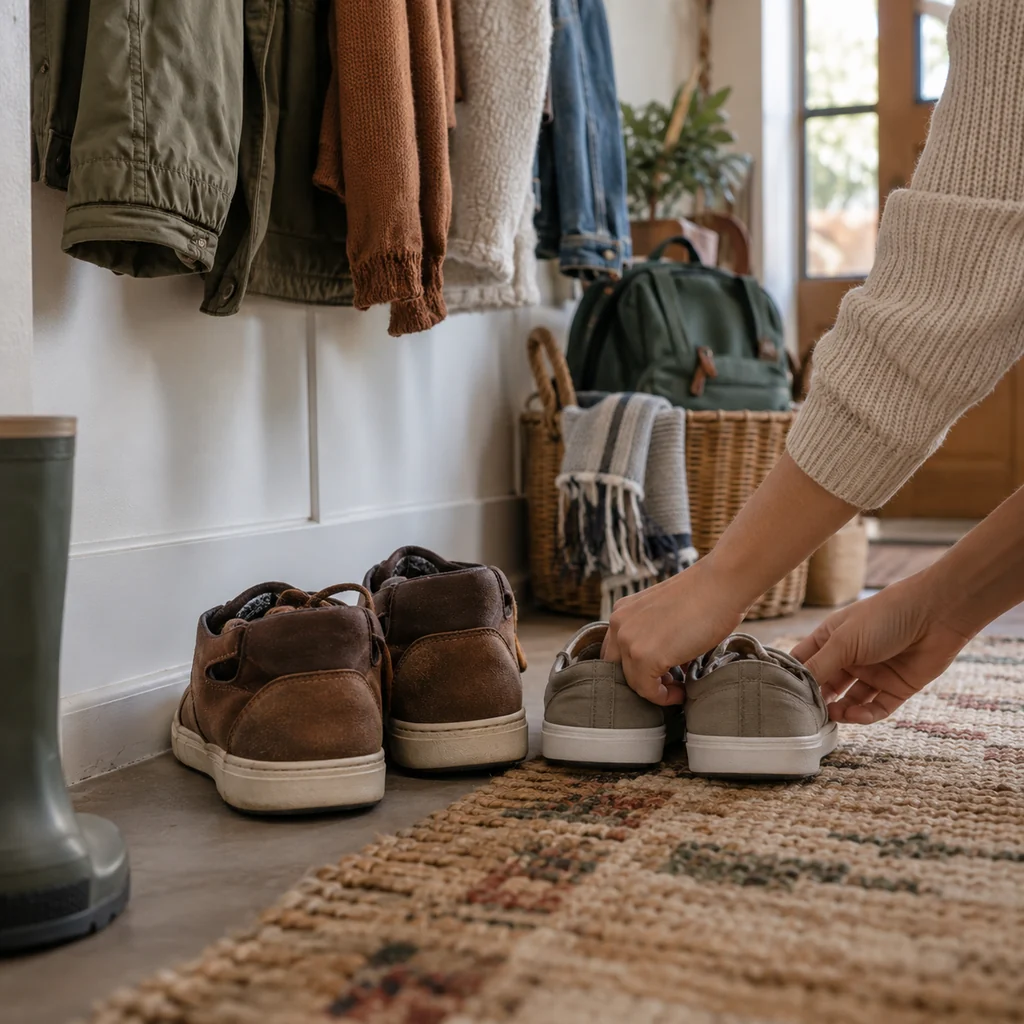
Start where guests enter. Line up the shoes, hang the most obvious coats, place loose mail in one stack, and move bags away from the walking path. Toss wrappers, receipts, and broken leaves from outside into your trash bag.
You are not building a permanent entryway system in two minutes. You are making the first view feel intentional and preventing your guest from stepping over a scooter. If the entrance still attracts daily chaos after today, borrow the broad-category logic from our realistic living-room toy organization system.
3. Triage the Kitchen, Starting With the Sink — 4 Minutes
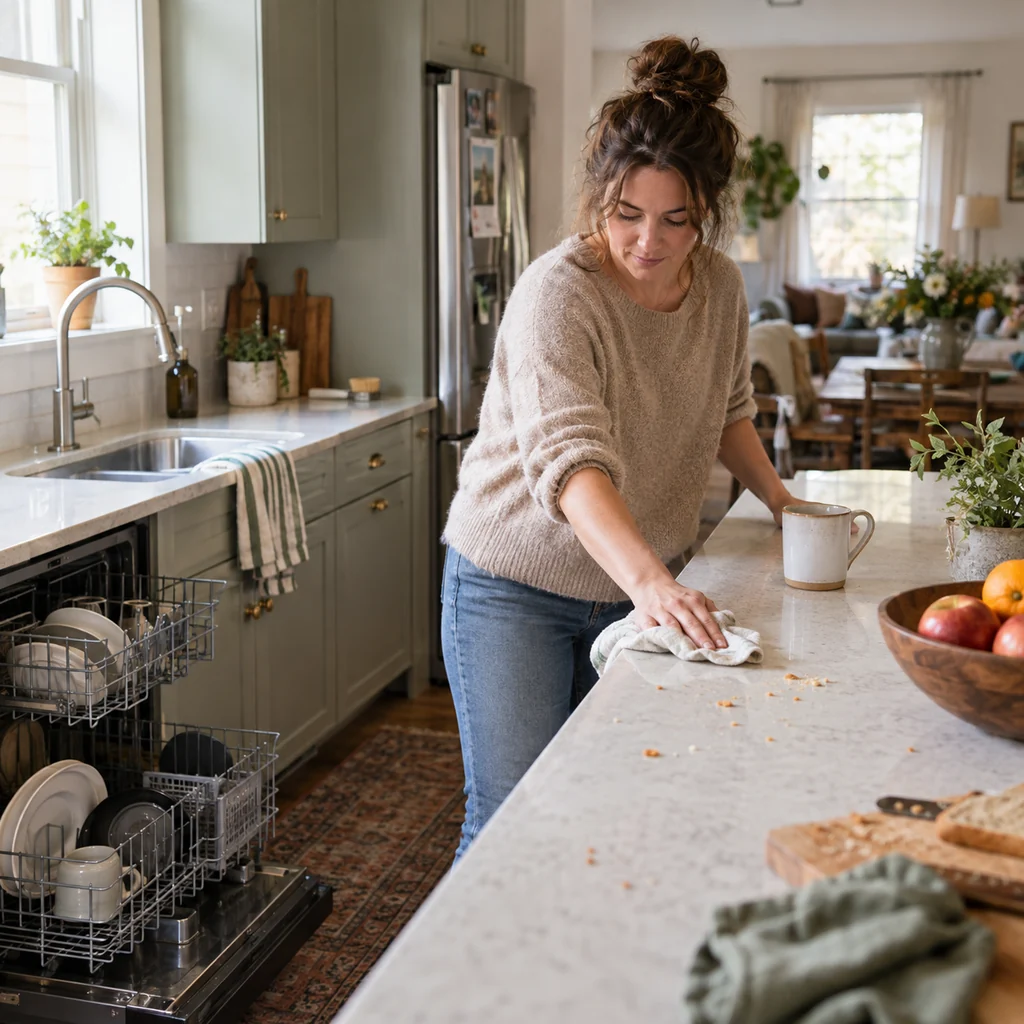
Load the dishwasher with whatever fits. If it is full of clean dishes, stack the dirty ones neatly in the sink rather than beginning an unloading marathon. Hand-wash only the one pan blocking the entire view. Put food away and throw out obvious packaging.
Wipe the sink rim and the largest clear section of counter. Do not move every appliance or attack the stove grates unless there is a spill guests can see from space. A usable counter, a controlled sink, and no old food will create far more calm than polishing six cabinet handles.
4. Make the Guest Bathroom Feel Fresh — 3 Minutes
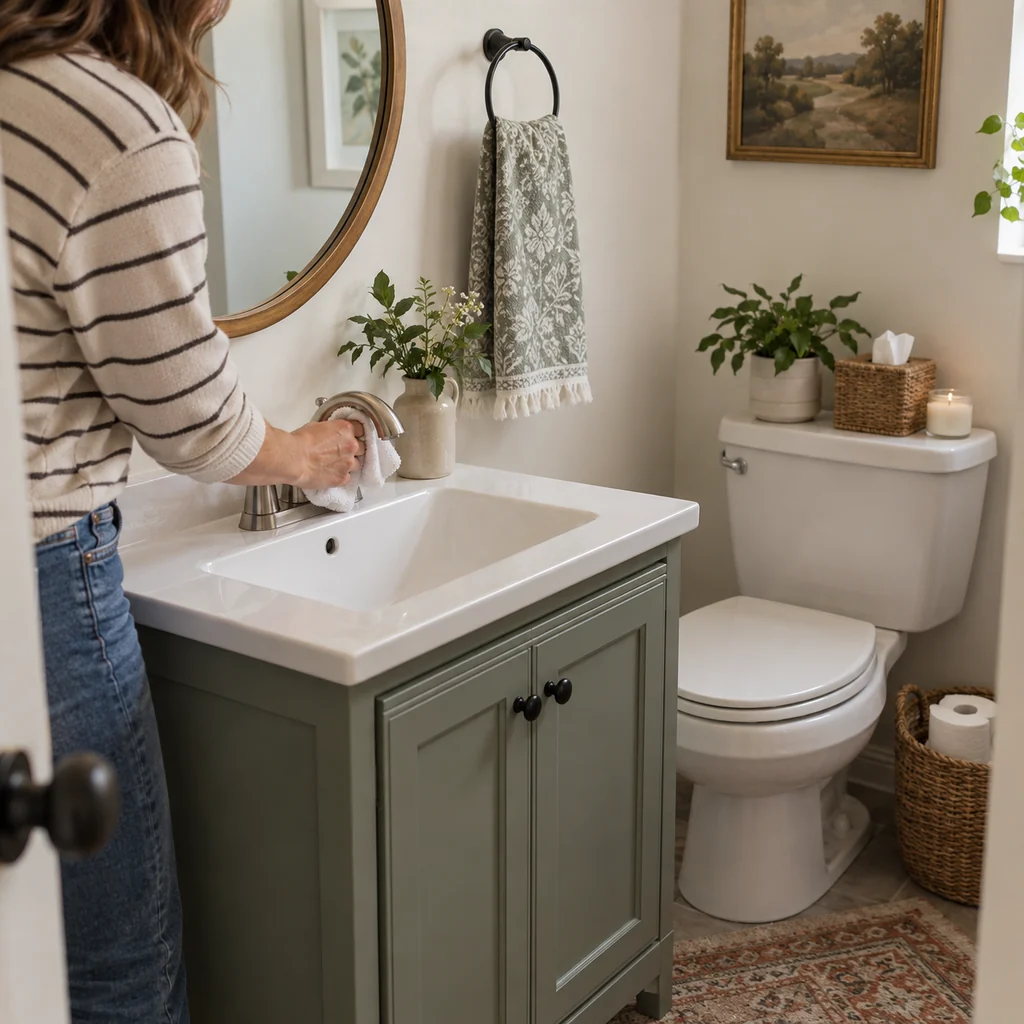
Close the toilet lid, wipe the seat and flush handle with a bathroom-safe product, then wipe the sink and faucet with a separate cloth or disposable towel. Never use the same cloth on the toilet and sink. Replace the hand towel, empty a visibly full bin, and make sure toilet paper and soap are available.
Move toothbrushes, bath toys, and the army of half-used bottles into a drawer or basket. Check the mirror for toothpaste splashes at eye level. Skip the shower unless your guest has announced a deeply unusual plan to inspect it.
5. Sweep Living-Room Clutter Into One Basket — 3 Minutes
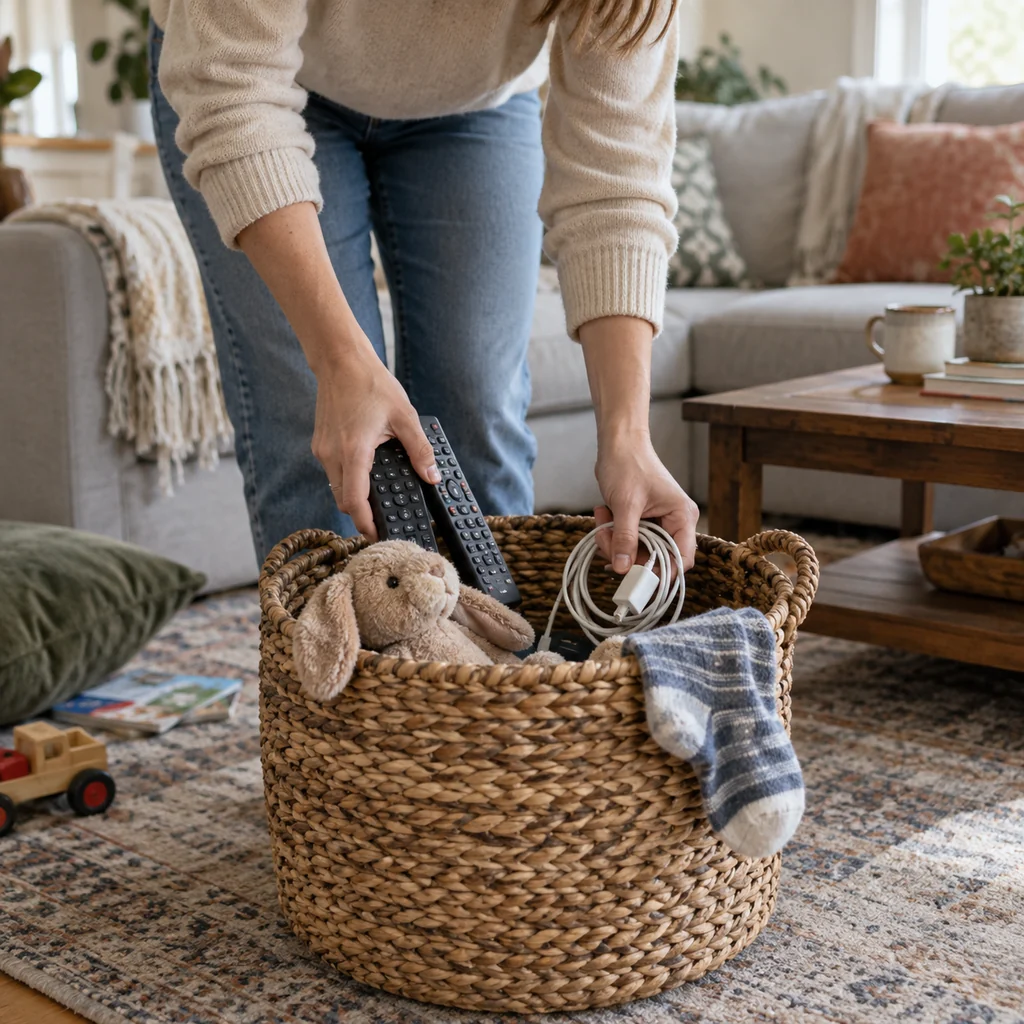
Collect toys, charging cables, stray socks, school papers, and anything else visually shouting from the floor or coffee table. Place items that belong elsewhere in your basket. Return only obvious living-room items, such as remotes, books, and throw blankets, to their usual spots.
Clear the main walking path and give the sofa cushions one firm reset. Fold or drape the throw; perfection is not required. If children are home, give them one concrete assignment such as “put every block in this bin.” “Clean the room” is apparently a philosophical concept, not an instruction.
6. Clear the Surfaces the Eye Notices First — 4 Minutes
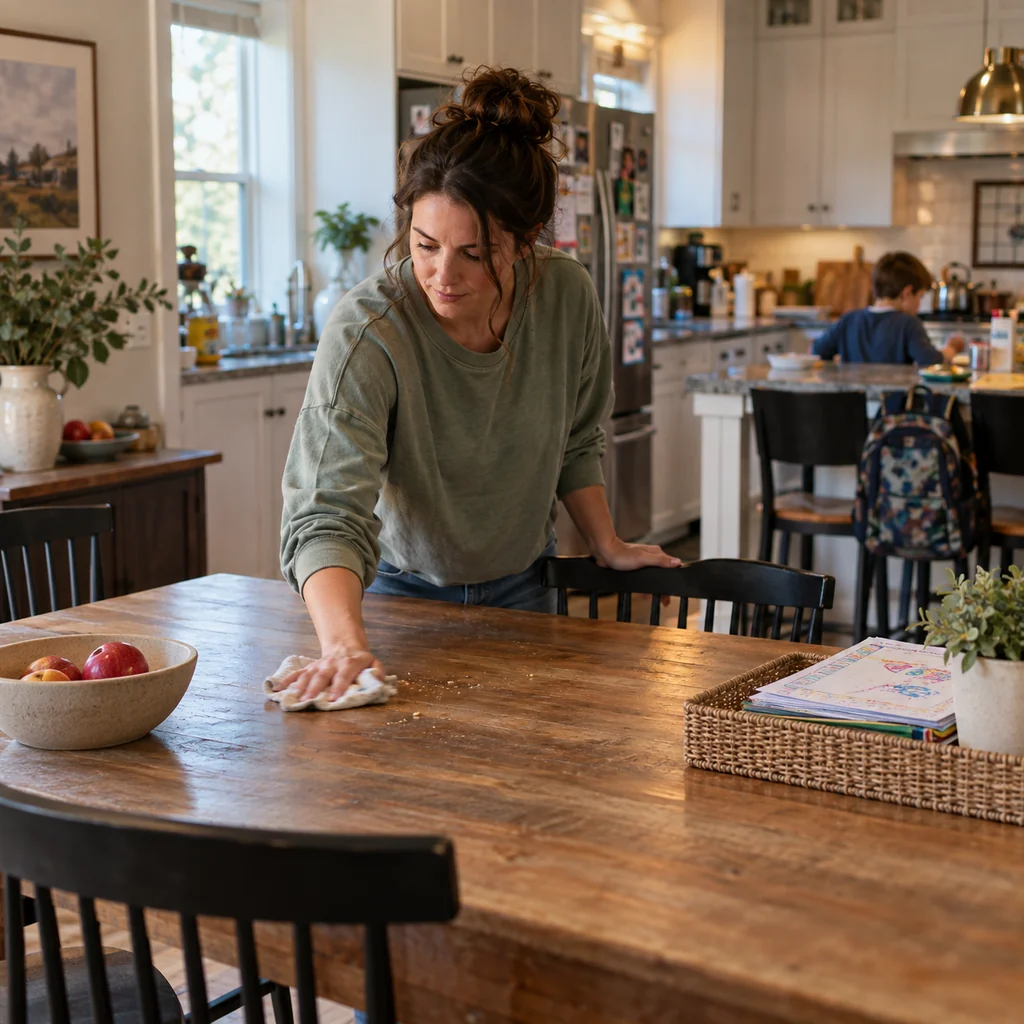
Choose two or three high-impact surfaces: usually the dining table, coffee table, and kitchen island. Throw away trash, move unrelated objects into the basket, and make one tidy stack of papers. Then wipe crumbs or sticky rings using a cleaner that is safe for that material.
Leave one useful or attractive object instead of stripping the surface bare—a fruit bowl, plant, or small tray is enough. Do not open drawers. Drawers are how a twenty-minute clean becomes an archaeological dig involving expired coupons and a charger for a phone you owned in 2014.
7. Finish With Floors, Light, and Air — 2 Minutes
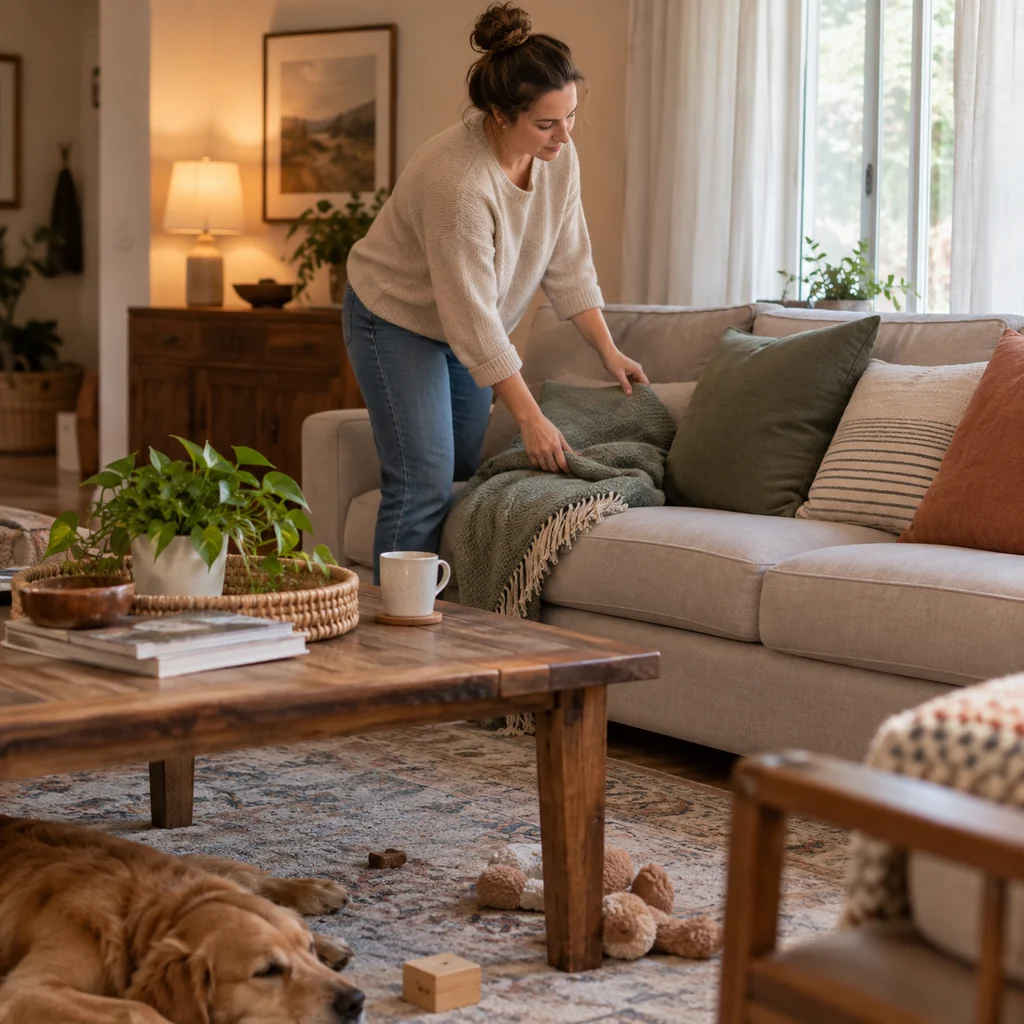
Vacuum or sweep only the visible crumbs, pet hair, and dirt along the main route from the door to the seating area and bathroom. Turn on warm lamps, open curtains, and crack a window for a few minutes if weather and safety allow. Avoid trying to cover odors with an aggressive cloud of fragrance.
Carry the clutter basket to a private room, take the trash out if it smells, and stop when the timer ends. The house should feel welcoming, not staged. Your guest is allowed to discover that children, adults, laundry, and toast have all existed here.
What Not to Clean When the Clock Is Running
- Bedrooms your guest will not enter
- Inside cabinets, drawers, closets, or the refrigerator
- Baseboards, ceiling fans, and windows
- Laundry that can wait safely in a closed room
- Decor that is slightly crooked but not dangerous
These tasks may matter during a deep clean, but they do not improve the next twenty minutes. Save your energy for hygiene, safe walkways, and the surfaces people use. That is not cutting corners; it is choosing the correct corners.
Make the Next Surprise Visit Easier
Keep a small cleaning caddy stocked and give the catch-all basket a permanent home. A short evening reset also prevents tomorrow’s clutter from arriving with backup; our 15-minute nightly routine is designed for exactly that.
Most importantly, decide what “guest-ready” means in your home. Mine means there is soap, somewhere safe to sit, and no wet towel on the bathroom floor. Nobody receives a medal for panic-cleaning the spice cabinet.
Try One No-Guest Practice Run
The least stressful way to learn this reset is when nobody is coming. Start a 20-minute timer on an ordinary evening, take one quick photo of the entry, sink, bathroom counter, and main seating area for your own reference, then follow the order exactly. You are testing the sequence, not auditioning your house for a magazine.
When the timer ends, stop. Compare only what a guest would immediately see or use. The usual surprise is that an empty sink, a clear place to sit, a wiped bathroom sink, and an unobstructed walkway change the room more than detailed dusting does.
- Note the bottleneck: if dishes consume ten minutes, use a dishpan or one contained counter zone next time rather than hiding dirty items in an oven.
- Count the relocation basket: if it is overflowing, choose a larger basket or limit the sweep to the guest-facing room.
- Schedule the follow-through: set a reminder to empty that basket after the visit so “temporary” does not become permanent.
Use one familiar all-purpose cleaner according to its label, ventilate as directed, and never mix cleaning products. A convincing quick reset comes from priorities, not stronger chemicals or unsafe shortcuts.
Frequently Asked Questions
What if I have only ten minutes?
Do the entrance, bathroom, living-room basket sweep, and kitchen sink. Those four zones deliver the strongest visual and practical improvement.
Where should I put the clutter basket?
Move it to a bedroom or laundry area guests will not use, then set a reminder to empty it within twenty-four hours. Otherwise it becomes a portable junk drawer with handles.
Should I light a candle to make the house smell clean?
Fresh air and removing odor sources are better first moves. If you use fragrance, keep it subtle and follow fire-safety guidance; never leave a flame unattended.