If your living room looks like a daycare by 10 a.m., congratulations: your children are playing and your house is being used. Unfortunately, your nervous system may not care about that beautiful developmental truth when you step on a plastic carrot while holding coffee.
The goal is not to make your living room look child-free. That is a fantasy sold by people with either a playroom, a basement, or suspiciously quiet children. The goal is to make toys easier to see, easier to put away, and less likely to swallow the only adult space you have left.
This system is realistic for tired parents. It uses fewer categories, fewer visible toys, and storage that a child can actually reach without summoning you like household tech support.
Before You Buy Another Basket
Do not start by shopping. Baskets are wonderful, but they cannot solve a toy volume problem by themselves. If too many toys live in the room, even the prettiest storage becomes a decorative landfill by Tuesday.
First, decide what the living room is allowed to do. Maybe it needs to support blocks, books, pretend play, cars, and one soft-toy basket. That is plenty. Everything else can rotate, move bedrooms, get donated, or live somewhere that is not directly beside the couch.
The Living Room Toy Rules That Actually Work
- Use broad categories instead of tiny perfect labels.
- Keep containers low enough for children to reach.
- Limit the number of toys visible at one time.
- Give tiny pieces their own lidded container.
- Keep one catch-all basket for fast evening resets.
These rules work because they reduce decisions. A child may not sort jungle animals from farm animals after dinner, but they can put “little figures” in one bin if the bin is obvious.
1. Sort Before You Organize
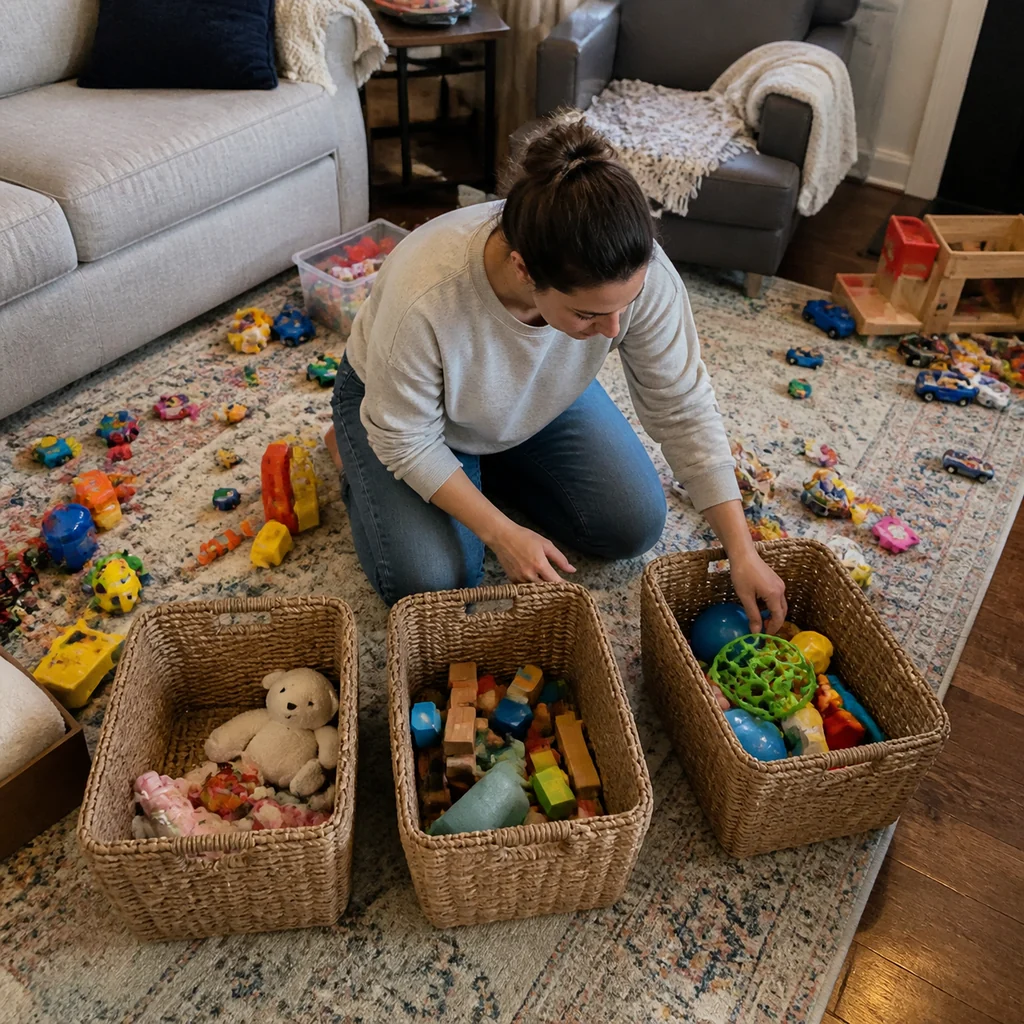
Pull the living room toys into one visible pile and sort quickly: keep here, move elsewhere, donate, trash, and mystery pieces. Do not build a sentimental biography for every plastic item. If nobody has played with it in months and it does not belong to a cherished set, it can probably leave the room.
Work in short bursts. Set a timer for twenty minutes and stop when the timer ends. Toy sorting gets emotional fast, partly because everything looks expensive when you remember buying it, and partly because children suddenly love any toy headed toward a donate bag.
2. Reduce the Number of Toys Kids Can See
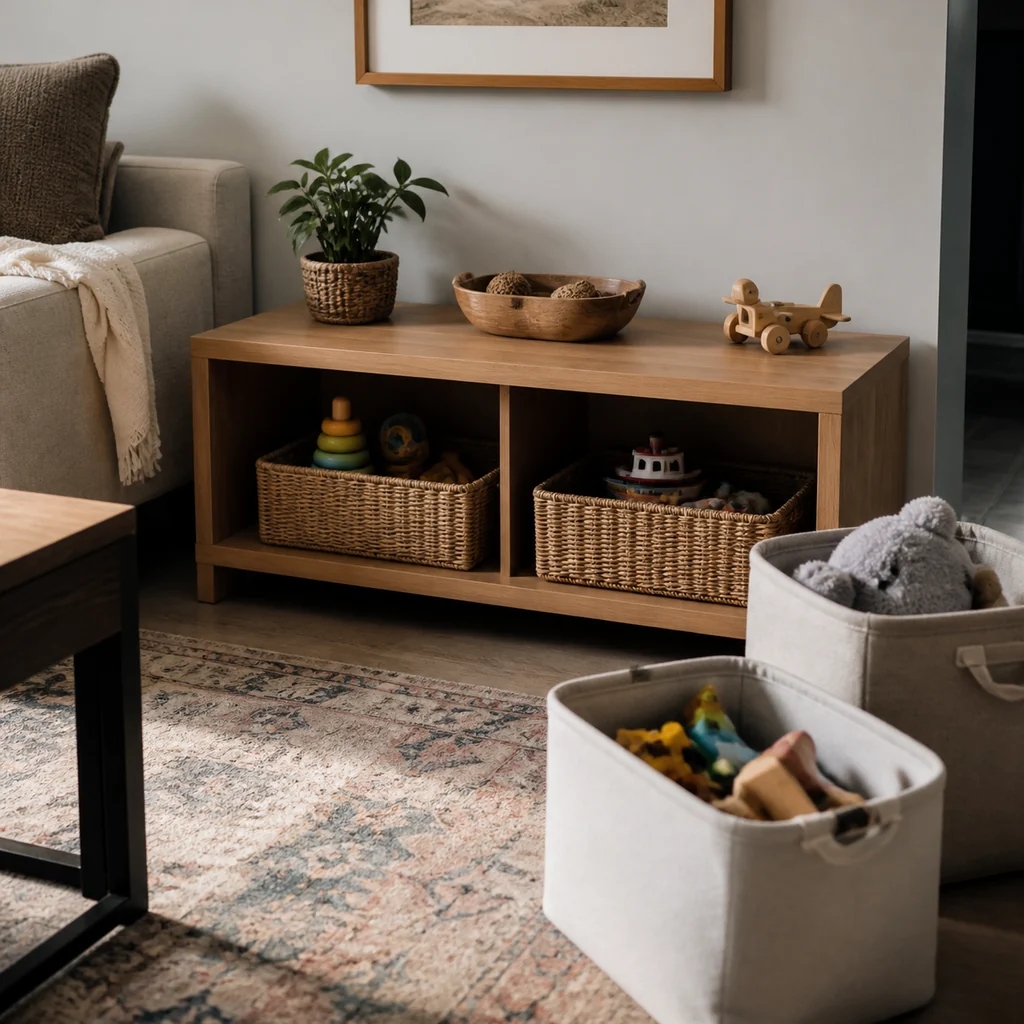
A room with fifty visible toys invites dumping. A room with ten visible options invites actual play. Choose a small number of toys for the living room and store them where they can be seen without being scattered across every surface.
This is not about depriving anyone. It is about reducing visual noise so children can choose more easily and you do not feel personally attacked by the rug. Keep favorites available and move the rest into rotation.
3. Create Simple Toy Zones
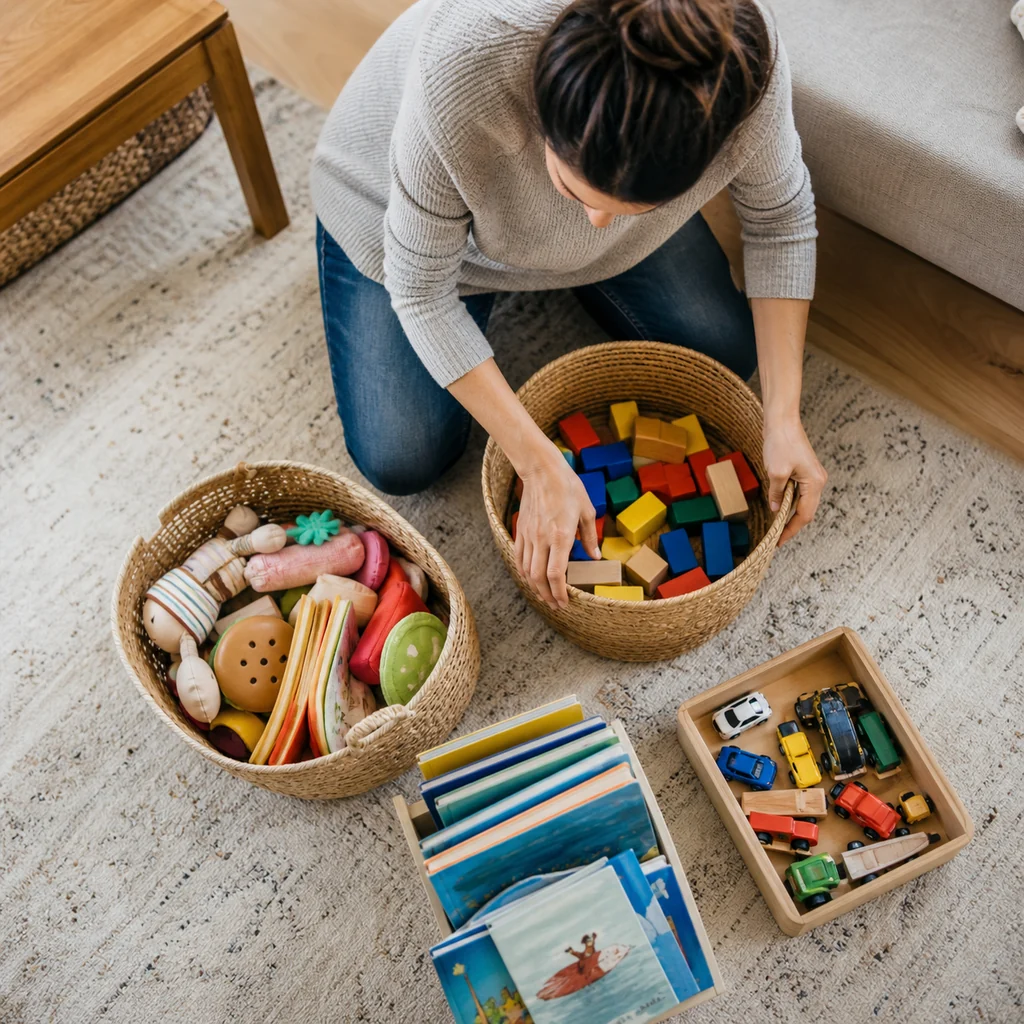
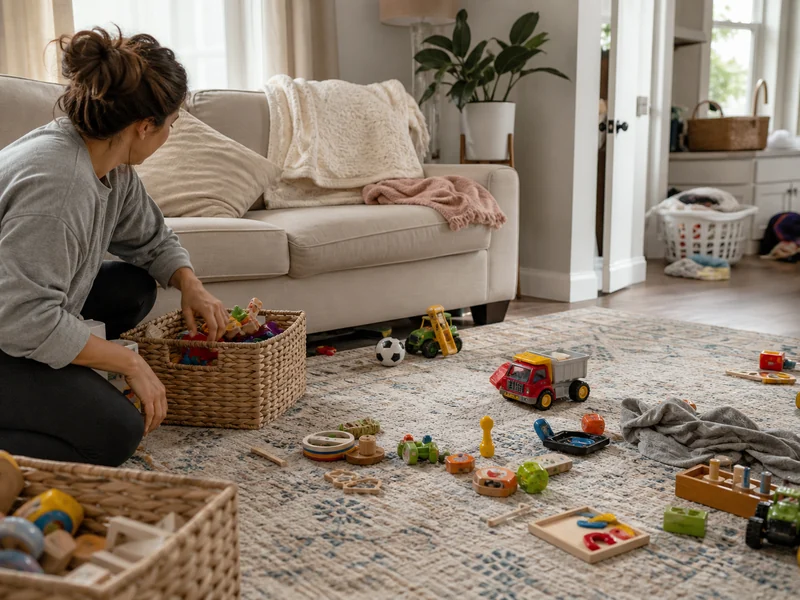
Zones sound fancy, but they can be embarrassingly simple. Books go low on a shelf. Blocks go in a basket. Cars go in a tray. Pretend play goes in another basket. That is the entire meeting.
Place each zone where the play naturally happens. If the cars always end up by the coffee table, stop fighting geography and put the car tray nearby. Systems fail when they require children to cross the house for no reason.
4. Add One Living Room Catch-All Basket
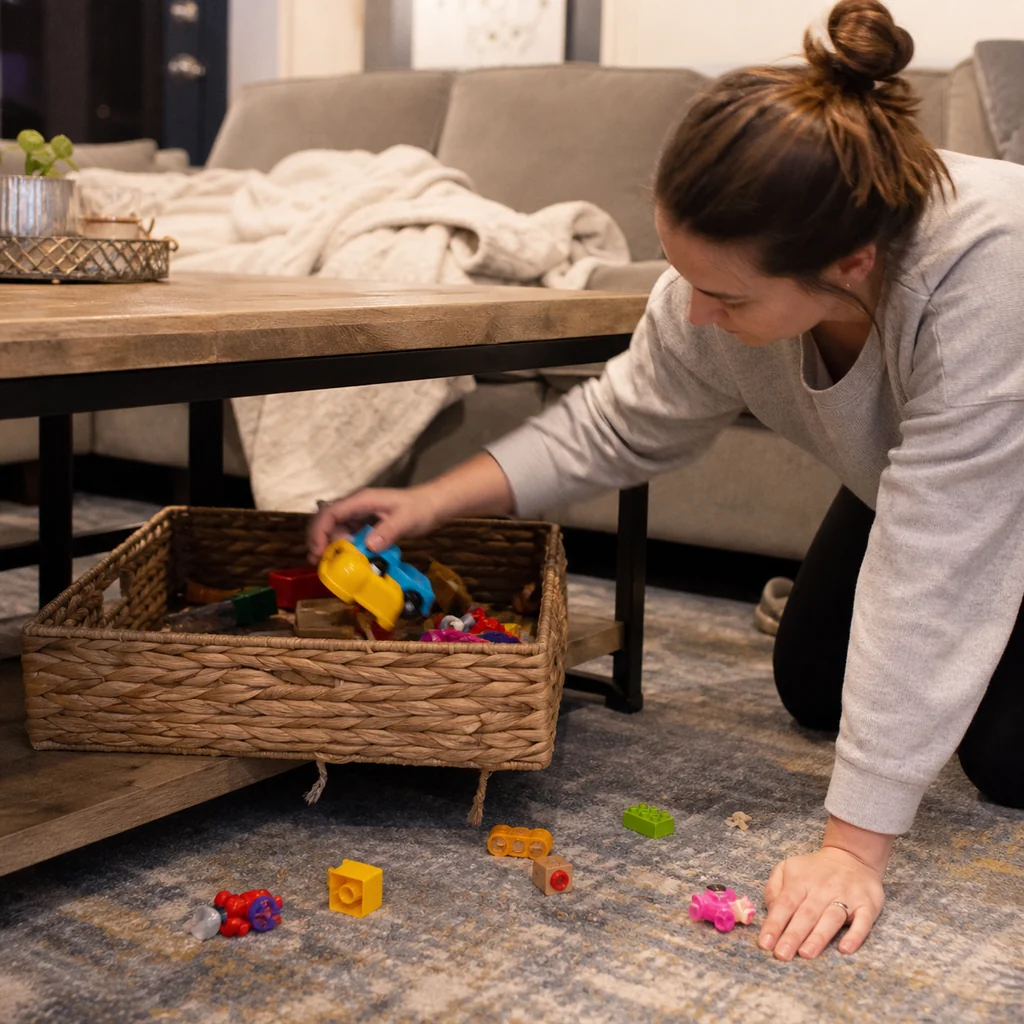
This basket is not a failure basket. It is a survival basket. At the end of the day, anything loose on the floor can go into it fast, especially when you need the room to look less like a toddler conference center before you sit down.
The catch-all basket should be attractive enough to stay in the room and large enough to matter, but not so large it becomes a toy landfill. Empty it every few days into the real zones. If it stays full forever, that is a sign the room still has too many toys.
5. Contain the Tiny Pieces Like They Are Planning Something
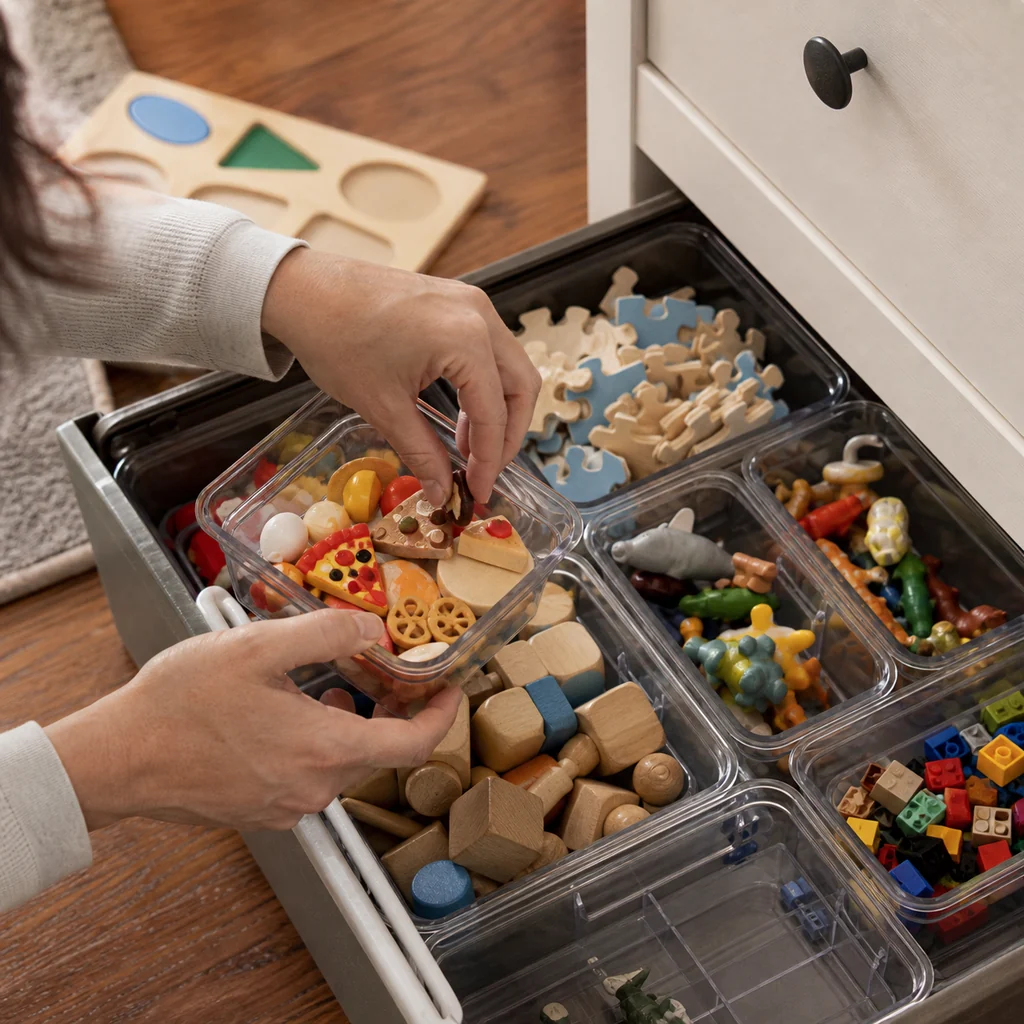
Puzzle pieces, pretend food, little blocks, doll shoes, and tiny figures need hard boundaries. Use shallow containers, zipper pouches, or small lidded boxes inside a drawer or basket. Keep sets together whenever possible.
Do not store tiny pieces in deep bins unless you enjoy watching children dump the whole thing to find one plastic strawberry. Shallow storage lets them see what they want without performing a full-room excavation.
6. Rotate Extra Toys Instead of Displaying All of Them
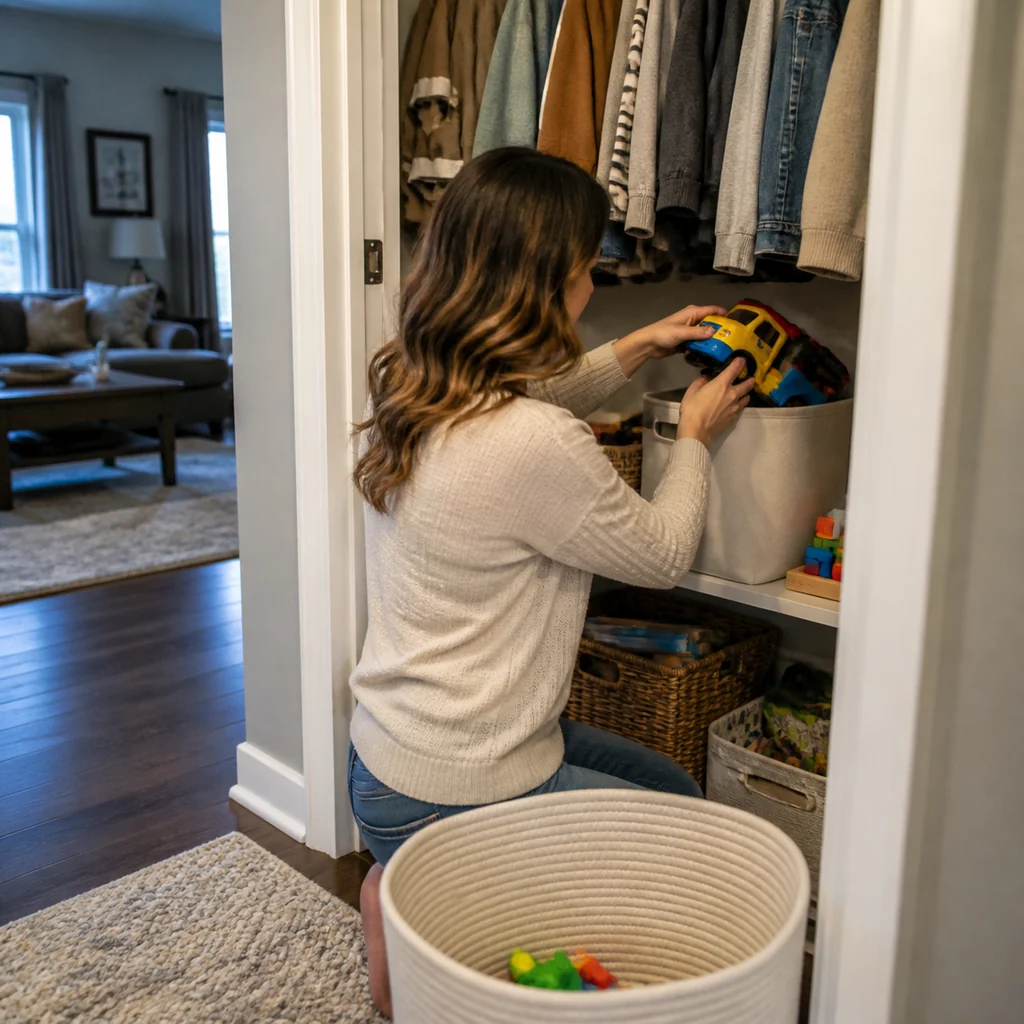
Rotation is the trick that makes fewer toys feel like more toys. Put extra toys in a closet bin and swap a few items every two to four weeks. You do not need a spreadsheet unless spreadsheets bring you joy, in which case congratulations on your rare hobby.
Keep rotation simple: one bin in, one bin out. If a toy is ignored after several rotations, it may be ready to leave. If a toy gets used constantly, let it earn permanent living-room residency.
7. End the Day With a Five-Minute Reset
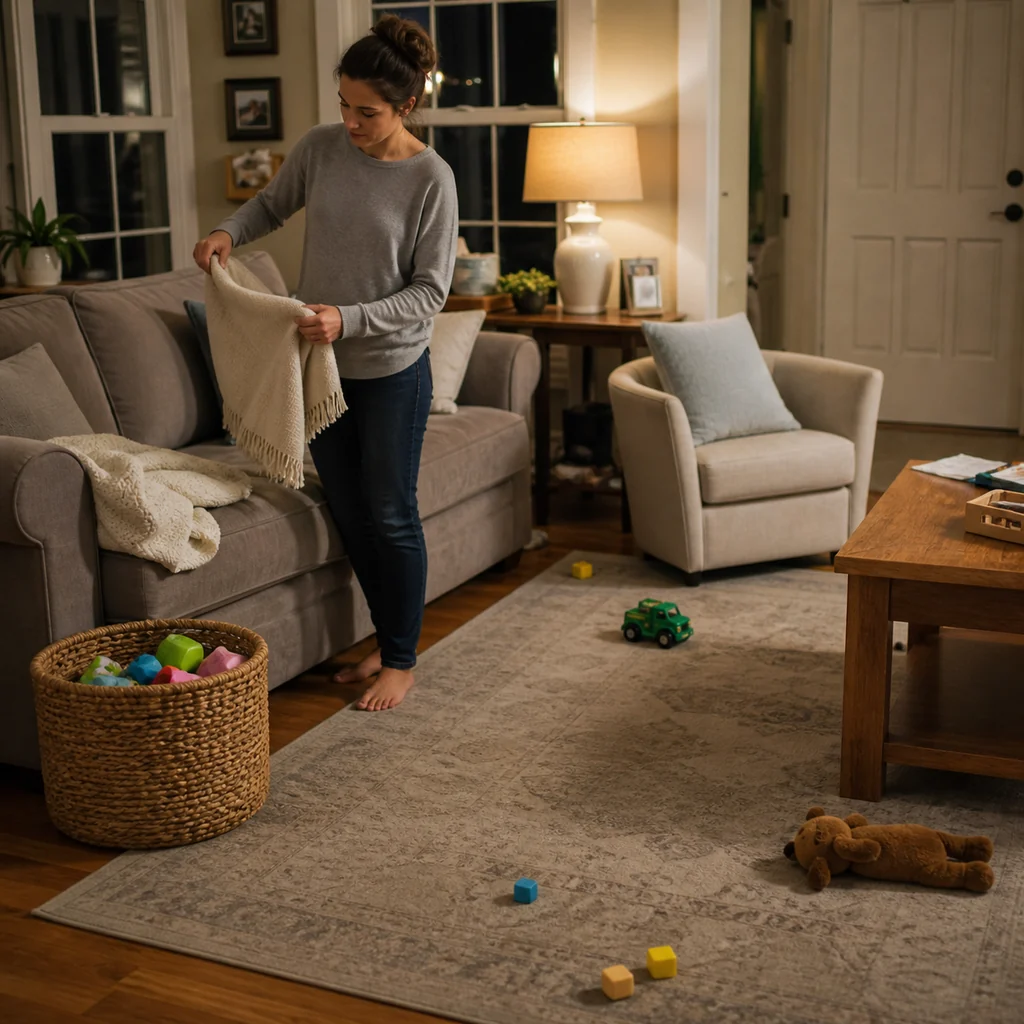
A five-minute reset keeps the system alive. Put toys back into broad zones, clear the walking path, and return the catch-all basket to its spot. Do not deep clean. Do not reorganize the whole house at 9 p.m. That road leads to resentment and a drawer full of batteries you did not mean to sort.
Invite kids to help with one concrete job: blocks in the basket, books on the shelf, stuffed animals in the soft bin. Specific jobs work better than shouting “clean up,” which is apparently a sentence only adults understand.
What to Do When the System Falls Apart
It will fall apart. That does not mean the system failed; it means humans live there. Reset the visible surfaces first, then the floor path, then the catch-all basket. If you only get those three things done, the room will already feel calmer.
When the room repeatedly explodes, remove one category for a week. Too many toy families competing in one space creates chaos. Fewer choices make both play and cleanup easier.
Try the Barefoot Floor Check for One Week
Choose the one strip of floor your household needs most—usually the path from the sofa to the doorway—and make that the success measure. Each evening, set a five-minute timer and return only the toys blocking that path or preventing someone from sitting down. Do not reorganize drawers while the timer is running.
For seven days, notice which categories repeatedly defeat the system. If dress-up clothes are always on the floor, the container may be too small. If blocks are abandoned across the room, their bin may be too far from the play spot. If children cannot tell where something belongs, the categories are probably too clever.
- Merge rarely used categories instead of adding more labels.
- Keep small pieces in age-appropriate closed storage and check sets for choking hazards.
- Put donations in an adult-controlled holding box for a week before they leave, in case a genuinely loved item was swept up.
At the end of the week, ask one practical question: can a child put away most visible toys with a single instruction? If yes, keep the system. If not, reduce what is available or move the containers closer. A living room can still look lived in and work well.
Frequently Asked Questions
How many toys should stay in the living room?
Keep only what fits comfortably in your chosen zones without forcing lids, overflowing baskets, or covering the walking path. The exact number depends on your room and your kids.
Should I label the bins?
Use picture labels if they genuinely help, but do not make labeling the project. Clear categories and obvious containers matter more than perfect signs.
What if my kids dump everything anyway?
They will sometimes. Make the reset easy enough that dumping is annoying, not catastrophic. Fewer visible toys and shallow containers reduce the damage.